
Sculpturewank - the threat to your hobby you’ve always ignored…
We’ve all seen those AI images right? From the early days… the ones where there’s a bunch of “stuff” in a scene but you can’t actually identify anything because it’s all just a visual mess.
Well, just in case you haven’t I found one for you to feast your eyes on. Thank me later.
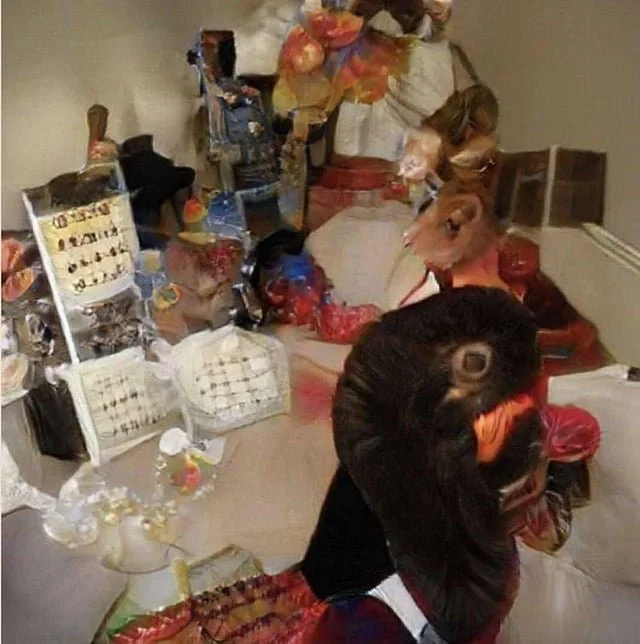
Visual Hell. No description needed.
What if I were to tell you that the same phenomenon that causes you to recoil from this, might also be causing you to procrastinate on, or even abandon altogether, some of your hobby products?
Allow me to introduce you to what I’ve been affectionately referring to as “sculpturewank.” This is a phenomenon in the miniature hobby that has become more and more prevalent as both sculptors and casters have gotten better over time, and I think it might just present a very real threat to your ability to enjoy painting toy soldiers.
Surface Vs Layer - The Devil is in The Details
There are two distinct types that we can use to define details, when we examine a miniature, both with easily identifiable properties and each with different outcomes in terms of how the affect your painting.
Surface detail is very easy to spot for anyone. Banner with an embossed icon? That’s surface detail. Armour plates with engraved filigree? Surface detail. Fur or material texture? Yep, you guessed it… those are surface details.
Surface details are fine… they’re great for tabletop painters, because they give you things to wash and drybrush on, but they don’t tend to cause display painters much fuss either. If you want to paint a model for display and it’s got too much surface detail, its pretty easy to get rid of. Ideal for those times when the painter wants to use that area to do their own thing.
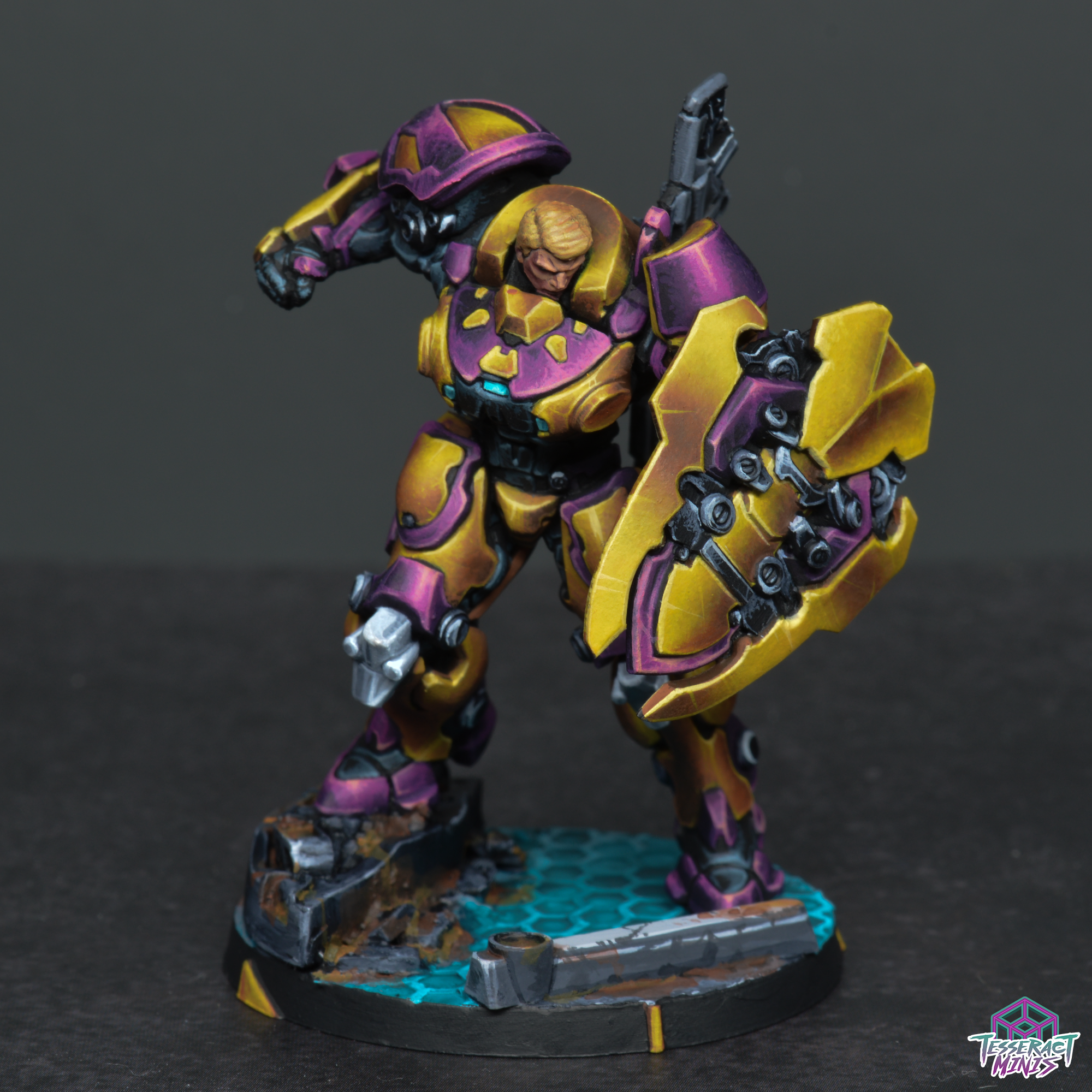
Maximus - Infinity, by Corvus Belli
The above image is an example of about my ideal level of surface detail, as a display painter… there’s plenty of flat areas where I CAN get creative, if I want to… but the model also has some nice surface level interest here and there on key areas such as the shield, the base, the chest and the face. This hits a nice balance of a flashy sculpt that impresses from afar, combined with a model that gives me agency to choose how detailed the paint job is.
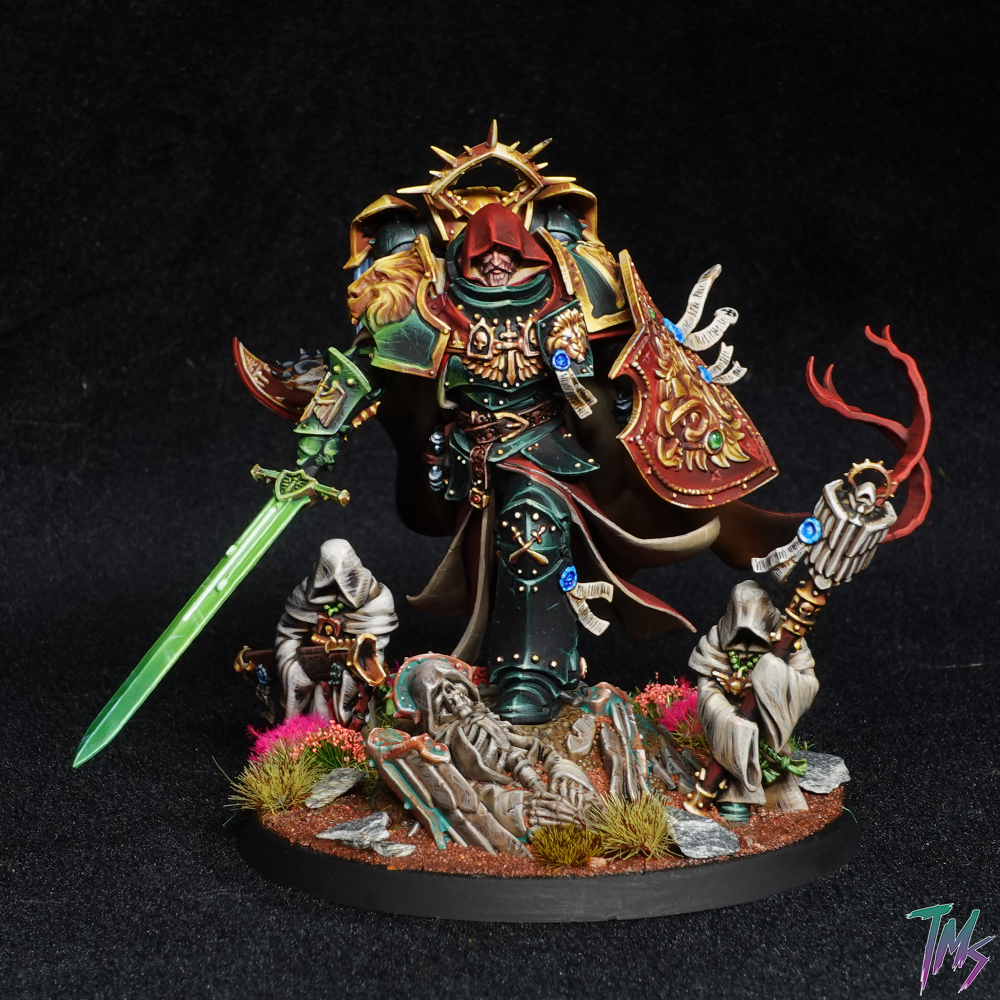
The Lion - Games Workshop
This sculpt (The Lion) is about pushing the boundaries for me… It DOES have a fair number of open areas where I can be creative… but a lot of the bigger, more prominent areas, like the shield, suffer from “The sculptor couldn’t leave it alone” syndrome.
I think stuff like this is fine, and has its place… it’s not the hardest job in the world to flatten that shield if you wanted to hit it with freehand… but I think it’s a good example that hints at when surface detail can take over the paintability of a mini.
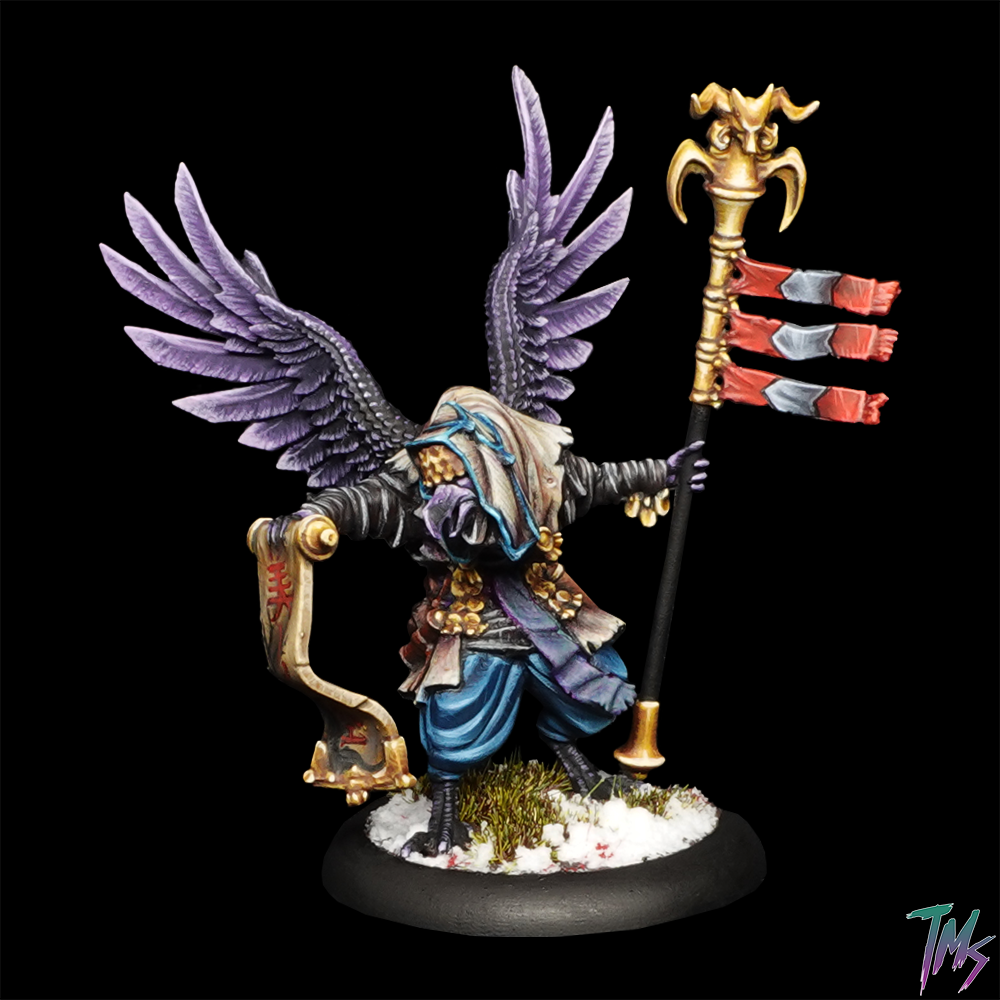
Tengu - GTC Studios Bushido
And finally an example of a model that for me, goes a little too far. Firstly I will apologise for being critical of this one in advance, because GTC and Bushido specifically are things I really like… but honestly I don’t paint many minis that fit this part of the explanation and this was the best example I could find in my back catalogue.
So why does this model fail? Well… the issue here is that at surface level this appears like a simple sculpt. It looks like something you could grab and get painted fairly quickly, with only the wings really being a choke point on your time.
But this is where looks can be deceiving and it can pay to have a bit more of a critical eye when you’re planning a purchase. This model has virtually zero uninterrupted flat surfaces… and all the ones that ARE plain and flat are mostly sculpted in to tight curves, which makes freehanding on them a nightmare. This is a combination of a slight (and it IS slight) overabundance of surface detail, combined with sculpting that doesn’t best serve the painter.
Actually I have a way better example of exactly this latter point… hold please caller whilst I pull it up.
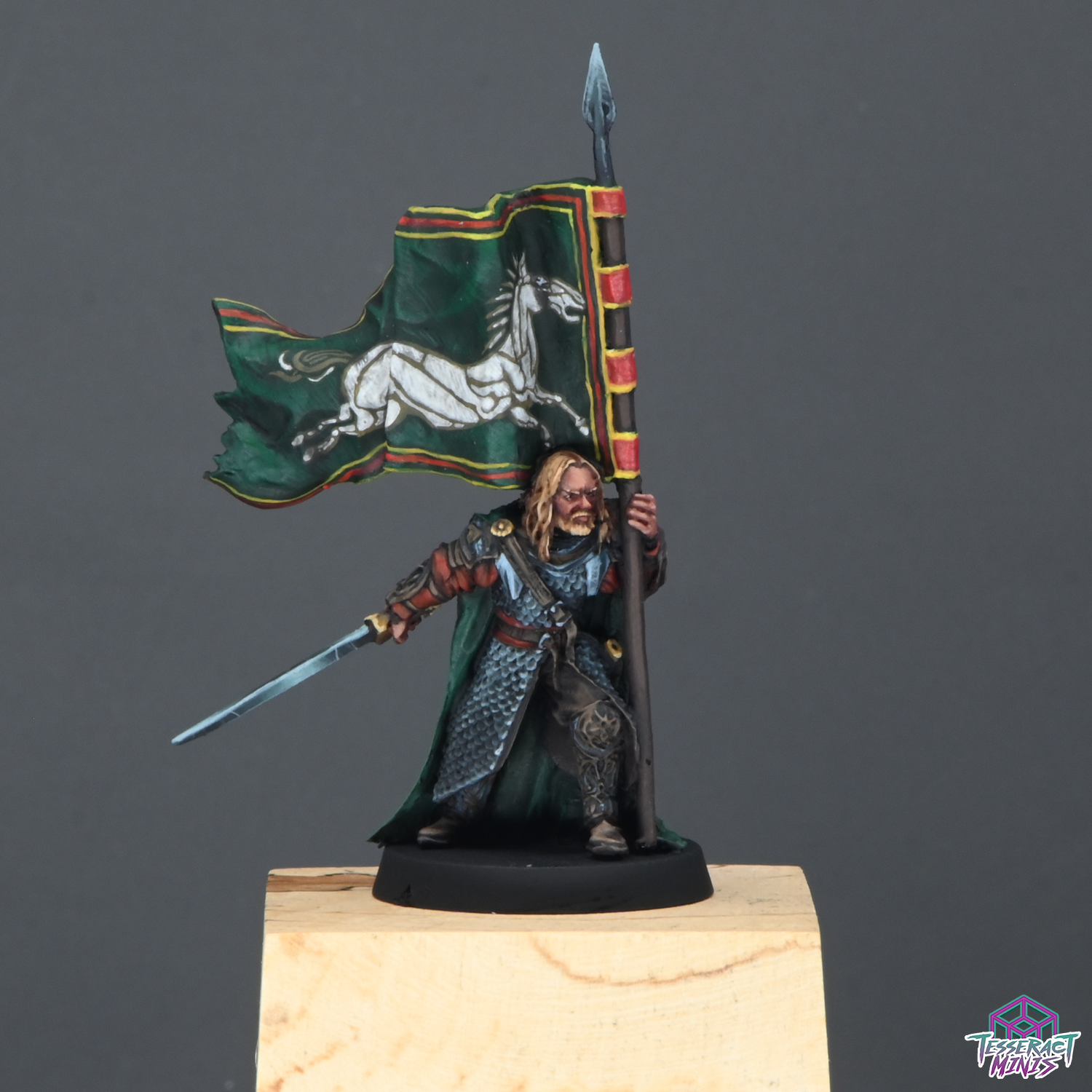
Gamling - MESBG Games Workshop
At time of writing, I finished this Gamling yesterday and whilst the surface detail here doesn’t massively disturb me (mostly because it’s a movie character and the sculptor doesn’t really have a choice when they’re copying a thing that already exists), the banner drove me kinda nuts.
This IS a sidetrack, so forgive me, but I do tend to find this kind of sculpting usually goes hand in hand with overdetailing, so it’s worth mentioning here, because it can also tunnel you in to buying models you then find hard to finish painting.
I already mentioned that this piece is from a movie and therefore the reference not only dictates the sculpt… but is VERY likely to also guide the paintjob. That horse is getting painted on the banner in a LOT of cases… so why the hell was it sculpted with such a deep, billowing curve?!
Obviously painting it nicely CAN be done, and I’ve seen it executed far better than my attempt above… but for your average hobbyist it’s honestly more likely a “throw the brush down in anger” moment. Even the third party transfers that exist on Etsy don’t really solve the problem because the middle and tail portions of the banner have so many lumps and bumps in them that even with all the Microset in the world, it is going to be HARD to get a flat adhesion.
Surface detail and tight curvy surfaces do a GREAT job of selling an unpainted miniature, because they look impressive the second you see the piece in person, or see the masterfully painted box art. The question i’m asking you to ask here is “does that fit with my hobby?” We’ll get more in to that later. Let’s talk about layered detail first.
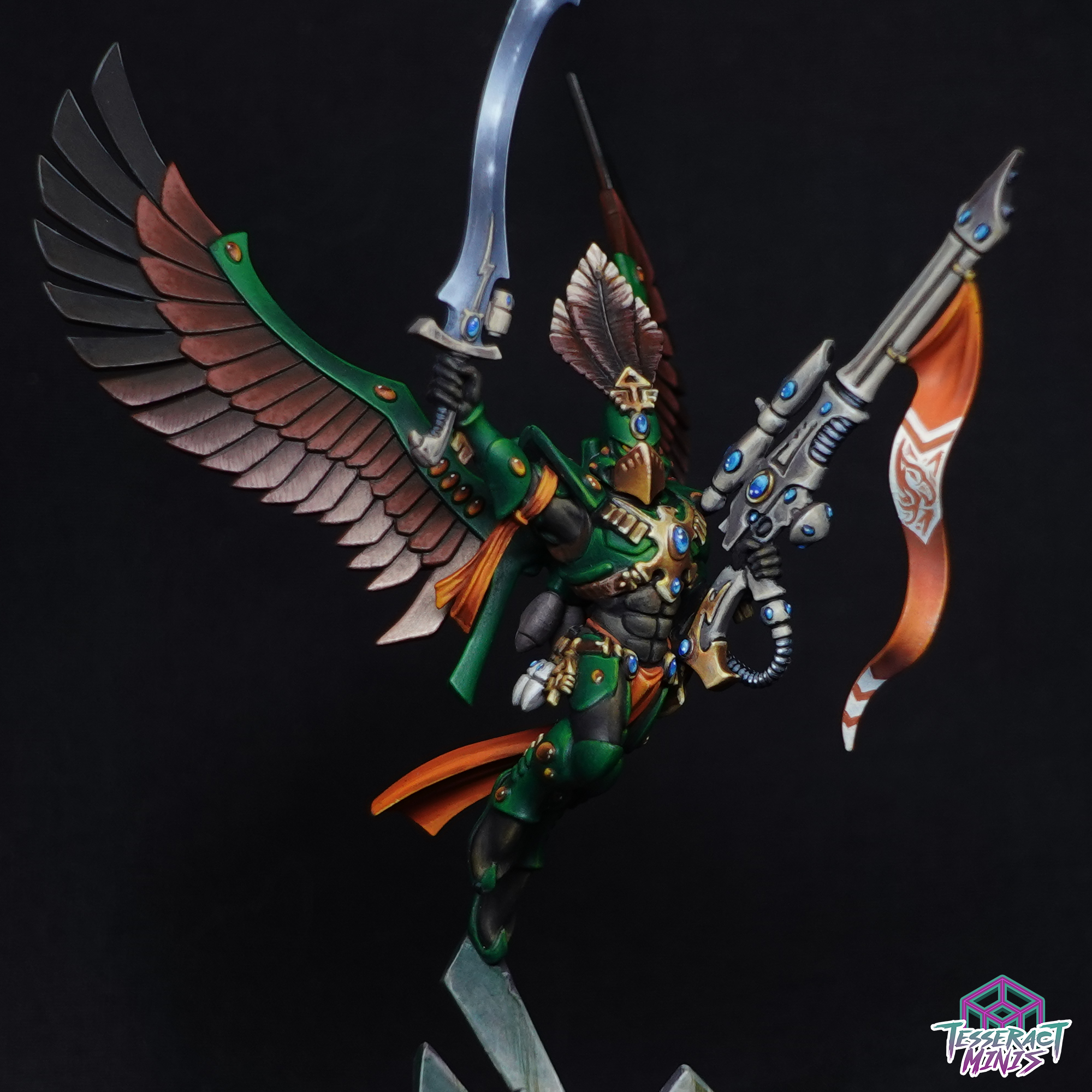
Baharroth - Games Workshop
Okay, lets talk about layered details. I want to start with not only what I think is a perfect example of the right amount of this, but also a model that I think is as close to a perfect miniature painting experience as possible. Baharroth - Swooping Hawks Phoenix Lord, the bestest pigeon.
Firstly lets look at the layered elements. We have:
The main body and head.
The gun.
The pinion on the gun.
the grenade pack.
The bollock cloth.
The wings.
The base.
7 Elements… enough to make the sculpt feel detailed, high fidelity and complete… but also not so many that the model looks like the image that opened this blog entry. This is, genuinely, one of my favourite miniatures I’ve ever painted, in the entire 35 years I’ve been painting.
It’s not only the sensible number of layered elements that make this perfect though, it’s how the kit goes together. His bollock cloth can’t really be painted in sub-assembly, because there’s a visible gap where it touches the legs, that needs to be filled.
However the pinion (where I imagine most of us will want to freehand) and the wings (where we’ll want to do flashy detail work and nice blends) both join at logical seams, where gluing after painting doesn’t leave any visible disturbance, meaning that they can, mercifully, be painted in sub-assembly.
This is design perfection in my eyes. It is one of the greatest achievements Games Workshop has ever graced the market with… and for many of y’all it’s probably a bit of a throwaway model. I rarely hear people sing the praises of this piece, as a sculpt and I think that illustrates how conditioned we are to actively desire models that are woefully unfun to paint.
I’ll illustrate with the only mini not painted by me that I’ll use in this article, because I flatly refuse to paint one.
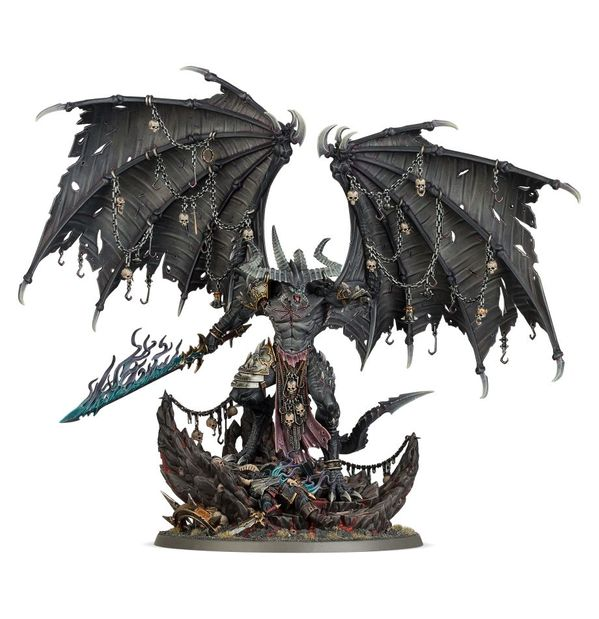
Be’Lakor - Games Workshop
Oh boy… I’m gonna get in so much trouble for this.
This sculpt… is TERRIBLE. It is the very definition of sculpturewank. Every single element is designed to show off what GW can do in terms of sculpting and casting and it doesn’t give a flying fuck about your experience painting it.
Lets break it down. Bearing in mind I haven’t owned this kit, so i’m not 100% sure on where the part breaks are and I’m using my intuition to make educated guesses.
Firstly lets look at the base:
The rocks.
Two chains each with dangly bits coming off them.
The little spiky halo.
The corpse, with the flames (?) and sword.
Not only does this base ALONE have about as many elements as Baharroth… but when we examine them we see a LOT of forced, prescriptive painting, from surface detail. The corpse has little tendrils of energy coming out of it. The rocks and chains all have little skulls dotted about… you are corralled into a lot of painting decisions here, just to use this model with its intended base. That’s before we even consider the levels of surface detail in the corpse…
The model itself appears less problematic at first glance. It isn’t. Again lets break it down:
We’ll generously call the main body and head a single piece here, because in painting, it’s kind of all one thing anyway.
We then have the bollock cloth… which of course just HAD to have chains and skulls over it.
The sword with integrated flames, as far as I know there’s no non-flame option and removing these would be HARD.
We then have a handful of armour plates - of course all highly surface detailed.
And finally the wings… the one area where you might wanna do some fun, expressive painting. They join organically to the body… so no painting in sub assembly here, unless you don’t mind a seam line visible in a smooth plane of skin.
But that isn’t even their biggest sin. I count 10 dangly chains with skulls and hooks, plus an additional 8 hooks just based on what I can see in photos. Each of these needing painting individually, in way that still fits in to the rest of the sculpt.
Not only is this model absolutely packed with surface detail, but it’s also a veritable dissertation in layered detail… and this is the real killer.
Every time one of those small, additional elements is added to a sculpt, that’s another bunch of paints that need to go on the palette. It’s another thing to potentially have to angle the brush round to reach a part behind it, it’s another item that used to be optional in miniatures… but thanks to sculpturewank, is now becoming the accepted norm.
Listen… I like the look of the Be’Lakor piece overall. if it were a drawing in a comic, or a 3D graphic in a video game, I would be giddy with glee at how badass it is… but as something to paint, as something to sit down and spend relaxing time with? I just don’t see how a model like that fits in with the lifestyle that the vast majority of miniature painters claim to subscribe to.
He Couldn’t Resist Reminiscing…
There was a time, back in the late 90’s and early 2000’s, where casting technology wasn’t really good enough to make miniatures like this… and instead it was an optional part of the hobby to embellish models with additional layers of detail.
It makes sense for miniature makers to want to show off how far things have improved over the years and I think there’s a ton of space for this in areas like collectible statues and figures, or model kits that aren’t made for painting… but wargaming miniatures aren’t just a marketable asset, or a game piece. The people who buy them put time and love in to them and they use them as a means to relax.
Bye and large, most of us in this hobby have day jobs and we want to spend time away from those day jobs unwinding, doing something pleasant and fun. We abandon projects like Be’Lakor because the frustration they create exceeds the value we hold in seeing them completed. Or even worse… we go from “I’m gonna really push myself on this” to “I just need this finished and no longer care”.
There ARE a rare few people who thrive when presented with these kinds of models, and back when I were a kid, they’d always come up with awesome ways to add fun things to their work… the difference was agency. People were given a choice.
And so the conclusion…
And that’s really what today’s blog is about, the erosion of choice from our hobby and the dangerous ground I think it leads us to walk.
Creativity is at the heart of what we do as miniature hobbyists… Sure, there are ABSOLUTELY some of us who just wanna assemble the model to the instructions, do as close as we can to a copy of the box art, bang it on a shelf or maybe play games with it, and that’s where the hobby ends. If that’s you, awesome! I dunno how you put up with this article to the end, but you’re a top person in my book and I’m glad you’re having a great time.
However if I’m speaking to a world of mostly creative types, which I do believe I am, we need to be aware of what we’re signalling major miniature makers to do.
Our dollar is how they measure what we want. They create what they think we will buy. If we praise and hype (and ultimately buy) these exquisite masterpieces of sculpting and casting, we will get more and more of them… leading to fewer and fewer options for people who want to do their own customisation, without being a master sculptor (at which point you may as well make your own minis!).
The inclusion of additional layered and surface details on models is famously often cited as an explanation for why those models are so expensive these days… this is a misdirection and it needs to be addressed. The amount of time it takes to sculpt a model and the cost of having the aluminium injection mould made are front loaded costs - they’re up front things that the company has to pay for to make the model initially. However… by the time they’ve sold thousands and thousands of copies, those costs account for pennies per model. Same as the plastic itself… it’s NOT a major contributor to the cost of the product.
It might shock you to know this… but the cost per unit of the PACKAGING your big centrepiece came in, was likely scarily similar to the cost of the model itself.
What makes big detailed kits expensive is simple - margin. That’s why you can buy a gunpla kit for £20 that’s as big as a GW centrepiece that costs £100, and contains parts engineered to articulate right off the sprue (they call them runners) - which believe me are FAR harder to cast than skulls and chains.
It’ll even contain multicoloured sprues - which again is a VERY specialised technique that requires specialised machinery to do. The simple difference is that Bandai don’t make as much margin per kit. Although they DO sell a LOT of kits…
We could probably converse for some time about whether Bandai sells more kits than GW et al, but even if GW sold twice as many kits as Bandai, I still don’t think they’d price them cheaper. That’s not REALLY the point of this final section… but this is:
If it’s significantly harder to paint, it’s often going to be less fun. If its ALSO significantly more expensive than your usual spend… you’re running the risk that you’ll feel awful for abandoning it. So all I ask is that you ask yourself “Is this what I want from my hobby?”
Is sculpturewank more important than your pleasure or relaxation, and is it worth spending most of your hobby funds on?
Again, my beloved readers… if you don’t fit in to the categories of people I’ve discussed here, that’s a GOOD thing… it means that a potentially negative outcome is unlikely to hit you.
I like to write for the folks who are chasing down finding their feet in the hobby, because for SO many years, that was me. If you’re one of those people, then I really hope these words help.
If you want choice back in your hobby and think sculpturewank should be the exception, not the norm… the path forward is simple. Paint more chill stuff, customise it to your own level of desire and take back control of your hobby.
You can check out @beejasminepaints @spacemeowrines or @sarah_of_the_leafy_greens on instagram for some shining examples of hobbyists doing EXACTLY this and having a great and fun time. All the inspiration you’ll ever need!
With love,
Stu