
We just got done teaching a wonderful little class down in Frome, Somerset…and it was truly an eye-opening and inspiring experience.
I always find that when I sit down at the desk for the first day after something like this, I have so much going round in my head that I want to get out, either for posterity or to reference back to…so today you’ll be subjected to a blog about education.
Don’t let that put you off though… because by the time we get to the end of this blog, I’m going to drop on you a development plan that I guarantee, on stake of my own good name, will set you up for life, as your journey through the depth of miniature painting.
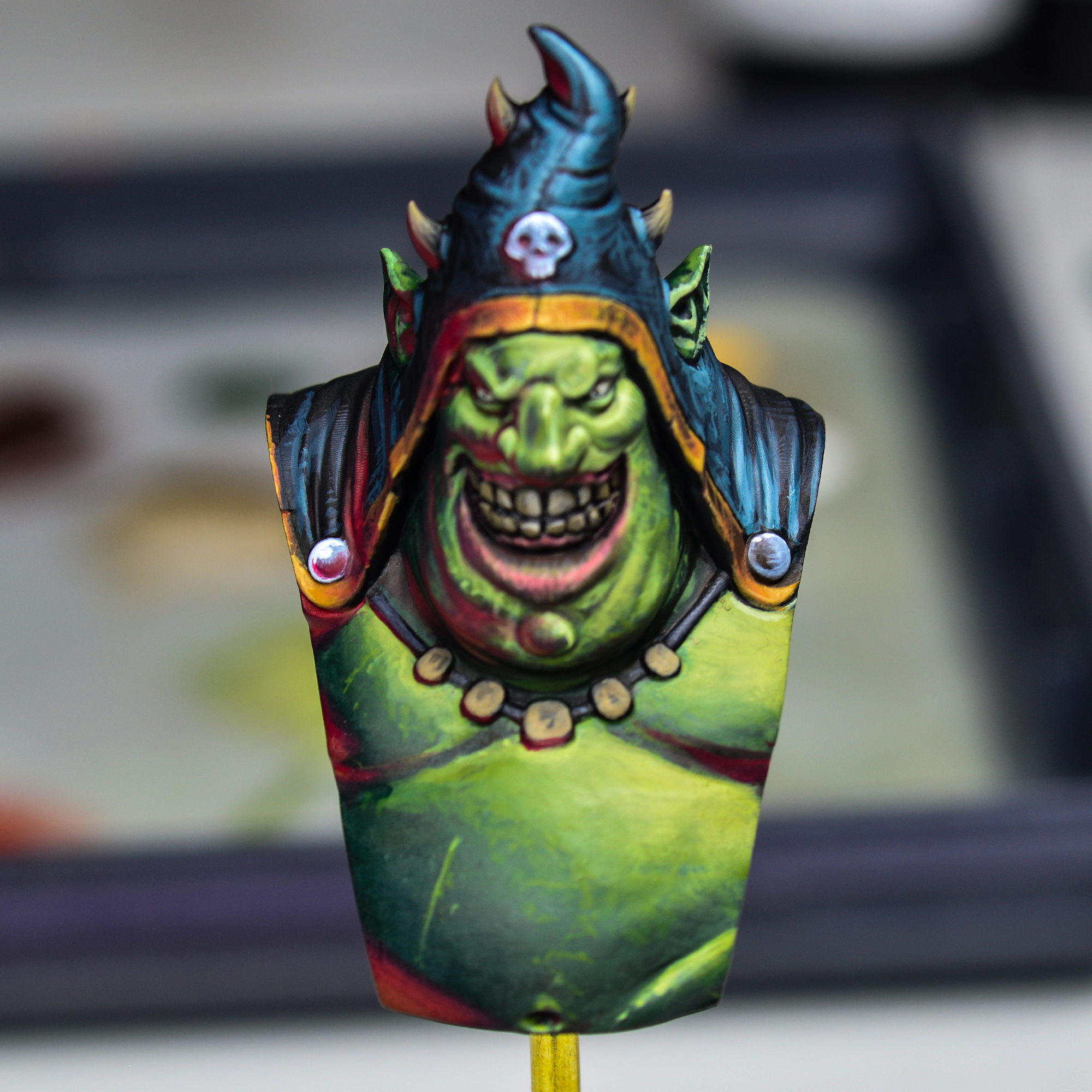
Goblin King Bust, painted by me, during the class.
One of the reasons I’m so deeply obsessed with teaching miniature painting is because it’s one of the most effective tools I have for facilitating MY OWN improvement. I’m pretty single minded these days in wanting to hone my craft until the miniatures I paint, match my vision of them perfectly. Teaching painting allows me to explore a lot of mechanisms pertinent to this goal, through the eyes of both myself, and others.
Without a doubt, my most popular and tried and tested class is my “Introduction to Display Painting” class, which I’ve run now many times over the space of a couple of years. During that time, as well as the students coming away with different ideas and developments for their own painting, I’ve been able to fine tune that class to deliver EXACTLY the outcome I would have wanted from it, back in 2017-2018 when I first started to develop an interest in display painting.
This last run though, I think I actually delivered the best version of this class that I ever have…and what made the difference? I decided I needed to start including some elements that people might not want to hear. Stuff that reinforces areas of education where we need to take responsibility and make decisions that don’t always align with our instincts.
So strongly do I believe in this, and so positive was the feedback in response to it, that I’m going to put some of it out here in this article, and give away some of the most fundamental secrets to my teaching philosophy.
Who’s ready to hate me?
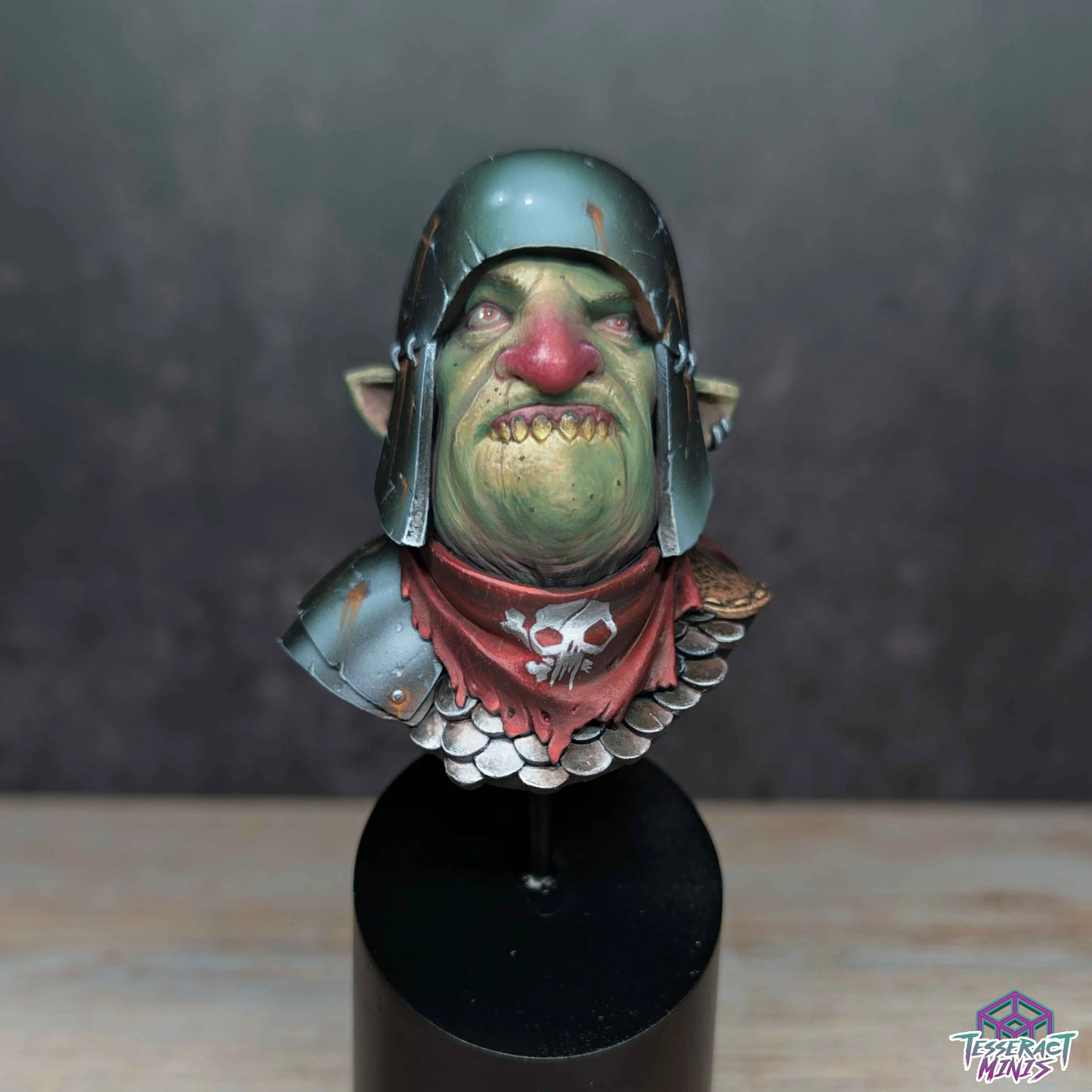
A Different Goblin, Painted for Competition
First and foremost, I need to get this one out there… Hype does not feed progress. In fact, it’s the death of it, in most cases.
How many times has someone told you “Oh I have that (insert expensive model) on my shelf… I just don’t wanna paint it, because I’m scared i’ll fuck it up!”
I have personally heard this more times than I can count, and I have heard it brought up anecdotally from others just as many times on top. It is probably the single most common cry for help that miniature painters make, I reckon.
Piles of shame are destroying your creativity, your motivation and your bank balance… and you can fix it.
Say you’re eyeing a purchase of a model that costs £100 - think like a Warhammer centrepiece model. You wanna absolutely crush it, and you buy it full of excitement and enthusiasm with every bright-eyed intention of making it the best thing you’ve ever painted.
You get it home… you open it, you look at the sprues/casting quality… it intimidates you. It goes on a shelf. It doesn’t get painted. Maybe not for months, years or even ever. I’ve seen a fair few social media posts saying “My (person) passed away recently and we’re selling their collection” only for that collection to be FULL of super complex centrepiece models that are still new in box.
That is HEARTWRENCHING for me. A genuine punch in the gut that brings tears to my eyes…and this isn’t a thing I’ve witnessed once or twice… it’s a thing I’ve seen a bunch over the years. It’s actually stuff like this that has been my prime motivator to laser in on the section of painting tuition that wants to bust down walls, rather than gild lilies.
Imagine a world where instead of buying 1 mini for £100… you bought, lets say 20 minis for £5? Simple single piece metal sculpts, or boxes of detailed but not overbearing infantry. You spend a year, doing your absolute BEST painting on your “worst” models. Let me tell you, at the end of that year you are going to be a NOTICEABLY better painter. Why? Because you actually painted models, and actually did your best.
What use is a stunning piece of injection moulding engineering or casting mastery, if you’re too scared to paint it, or when you finally do, it’s so hard to paint that you can’t even come close to painting your best on it? What goal has that purchase served?
There’s a reason all your favourite Golden Demon winners are shaving details off of models, or working on custom sculpts and large scale display miniatures. They give them room to do their best. The model isn’t fighting them.
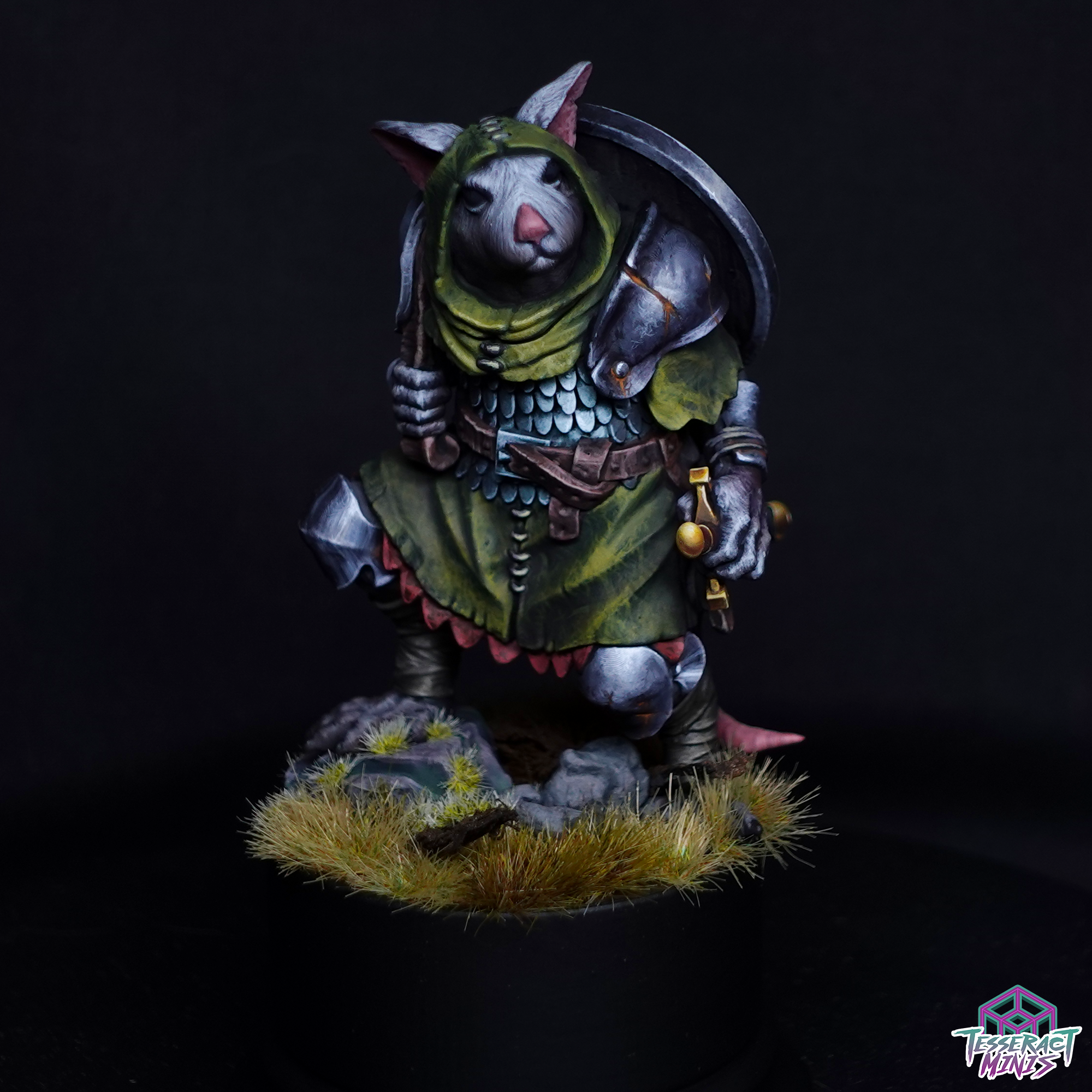
Martin, from Greyhawk Miniatures - My Favourite Piece I painted in 2025
And hype built around “sculpt quality” isn’t the only devil here… volume consumption hype is just as dangerous.
We are PLAGUED by huge box releases these days, massive “value for money” propositions where the price per model can get down to a few quid, and the quality of the pieces is unbelievable. We’re buying these things up like they’re going out of fashion (largely because a certain brand loves making essential purchases limited run) and then immediately becoming paralysed by the volume of stuff we have to paint.
What do we do in response? We buy something new instead! Because the motivation to paint the new thing is higher than to slog on with the box you secretly regret buying in the first place.
A few paragraphs ago, I gave the suggestion of painting 20 models in a year and then measuring your progress. That’s such a cavernous gap from the number of models most of us are shooting for in a year. I’m a full time professional painter, and if I’m working to the MINIMUM standard I will accept from myself, I can bash out an average squad of 10 in about 5 days. Maybe 4. So like… 40-50 hours? 5 hours a model sounds like a lot… but those models that come in squads tend to need cleaning, building, basing, varnishing etc. Realistically its probably actually about 3 hours a model and I’m willing to bet that’s about how long it takes most of us to plop out a decent tabletop job on an infantry sized model. I’m also willing to bet that most of us don’t account for build, prep, basing and finishing time when we say how long a piece took us.
I’m sure you’re starting to piece together the problems here, so I’ll summarise, and then we can move on.
If you’re trying (and struggling) to improve… you need to look at your buying habits. Fewer super complex models, fewer massive centrepieces. More stuff that enables good practice. Larger scales so can develop skills with more space to work, then refine them later once you understand the basics.
Less volume in general, will help massively. Give yourself space to breath and appreciate the process. Take time off the table as a cross to bear and make enjoying and learning the centre of why you paint.
Stop telling people you paint to relax, then shitting out 300 speed painted minis a year… that isn’t relaxing for most people, and creates a completely false impression of what the hobby is. Relaxing is mindfulness, peace, time, consideration, focus to the degree its comfortable, but not overbearing. Help yourself, whilst helping others.
If you can’t reconcile that painting multiple, vast, detailed armies doesn’t often align with a peaceful, growth driven experience, you might not be able to offer the best advice to people on their hobby journey.
Quality advice gives balance, it tells people that they can do many things, but they need to pick one (or maybe two). They can focus on speed if that’s fun to them, but they can’t do that AND focus on improving their overall quality and creativity in an effective, meaningful and measurable way.
You don’t HAVE to be both the best painter at your local shop AND the fastest pusher on social media. You can be one or the other or even just on the journey and you are still valid, important and contributing.
One really important pill you’re going to have to choke down though… everyone out there who’s doing actual high quality speed painting? They mastered slow painting first, then got fast at doing slow things. That’s exactly the trajectory my painting took too. I’m super quick at the stuff I have loads of experience in… but it still takes me forever to finish a decent comp piece.
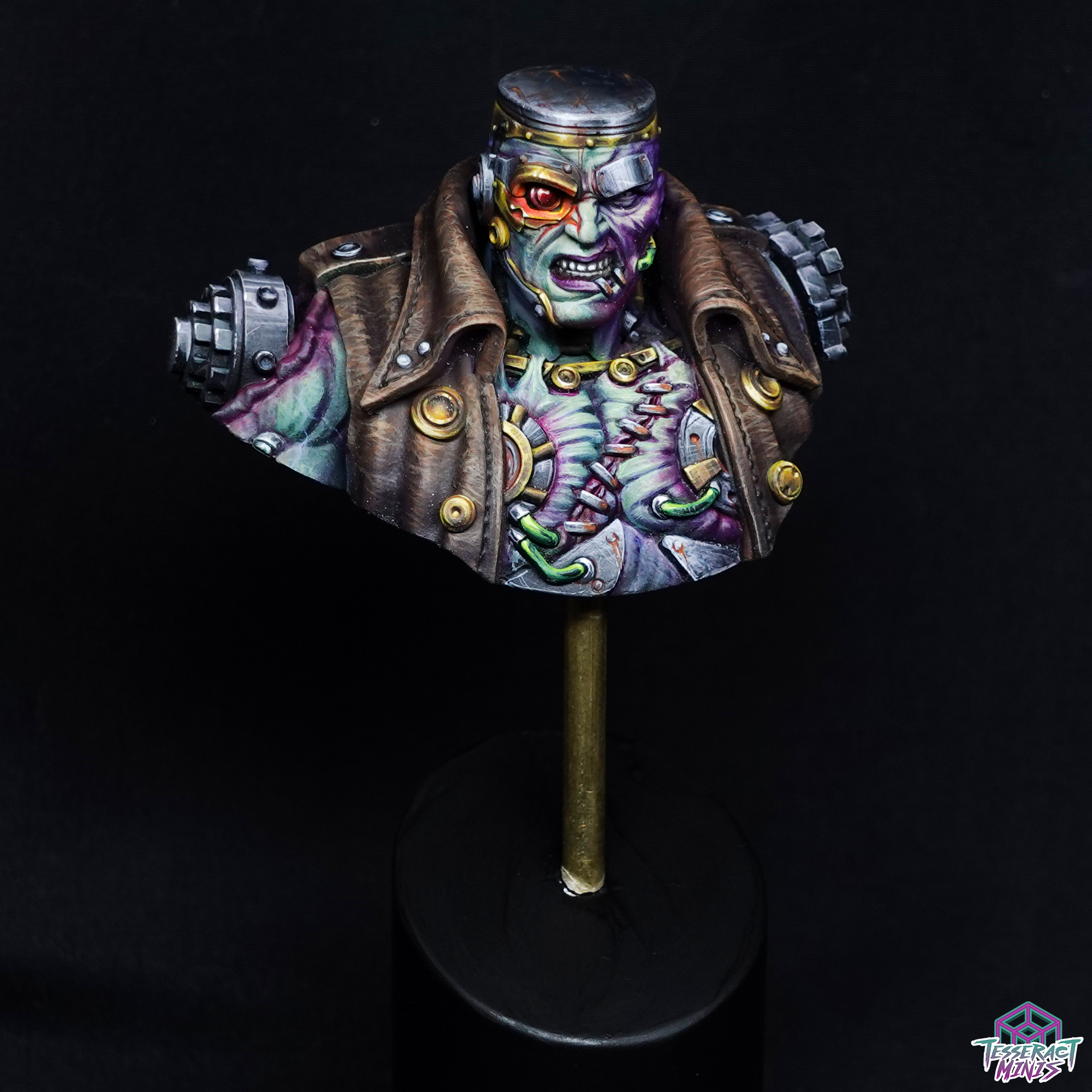
A Bust I painted in 2025 for Realms of Tiberium, a boutique universe of miniatures from Warren Walker
So now we’re all nice and uncomfortable and feeling told off, let me soothe you for a second.
I want to remind you that much of the advice and tuition you will encounter is built from anecdotes and experience. The above little chat about volume and consumption is a good example of that - it comes from talking to others and from taking stock of my own experience. There’s no peer-reviewed papers backing it up… its from the heart, well intentioned and informed by more years than I’d like to admit… but none of it is solid, irrefutable fact.
You might have a way of approaching the hobby that allows you to paint 500 models a year, to a standard that makes your average MPO entry look like a finger-painting. That method might only work for you, or you could be sat on a multi-million dollar gold mine of knowledge. We’ll never know unless you take the same risks I take, by putting your thoughts out there and trying to help people.
All of that is to say that just like how reading this article is a choice, following its advice is, too. If it resonates with you and you think it’s worth a shot, change things up for a few months and see what comes out the other side of it. Your Instagram metrics might suffer, but you can decide for yourself if the gains in your painting and your love of the hobby are noticeable enough to be worth it.
What IS solid, very hard to refute and backed by a whole bunch of science is my next point (which does actually link back to my previous one):
“Most of us have spent our entire miniature painting journey hamstringing our learning.”
Me included, by the way.
Here’s a little collection of studies on learning:
https://pubmed.ncbi.nlm.nih.gov/34715584/
Reading them in their entirety is going to be a slog, but there’s a nice summary at the top that outlines what I’m about to say here and backs it up.
Basically… there’s a sliding scale with education of “cost Vs outcome” when adults learn, we have a tendency to minimise the cost of learning by wanting to do everything as close to right as possible, every time.
Children, conversely, tend to be much less afraid of cost and are willing to explore, iterate and as I like to put it “learn through play”.
This flies in direct opposition of how most of us are learning to paint miniatures. We’re obsessed with procedural step-by-step guides, exact colour recipes and banishing all playful elements from our painting. We’re purposely, and in my opinion misguidedly, driving most of the fun out of a process that we’re undertaking purely for the sake of…FUN!
Again, I don’t want to shit on your pickles… Step by step, colour recipe guides have value in that they teach you to easily replicate a set result…and for a LOT of you out there, that’s going to be your goal. Hell, I’m starting a new YouTube series soon which will be exactly these kinds of guides, designed specifically to be copied from.
However if you’re looking to pursue open-ended growth as a painter, that kind of education isn’t likely to cut it long-term. Rather than copying the box art, you’re probably wanting to MAKE the box art, in your own vision. You probably want to be the person who can cook up all those cool ideas. That’s a different set of skills and the pursuit of those skills leads us to a really backwards way of approaching painting.
Most of us believe that you can teach skills, but you can’t teach creativity… right?
WRONG.
Learning a skill can be (though isn’t always) as simple as ten minutes of understanding the process, followed by a LIFETIME of practice (I call this “getting the reps in).
Learning creativity is an active pursuit, which we achieve through three things: Observation, experimentation and repetition. Let a boy break it down for you:
Observation: Seeing things we like and building a mental library of our tastes, preferences and the various moods that resonate with us.
Experimentation: Playing, without stakes. Doing the thing in a way where we have a rough idea of what we want and we chase it down just by moving paint around, trying different things and taking mental notes of what gets us closer to the vision and what doesn’t.
Repetition: Continuing to iterate and practice ONLY the things that fulfill our goals. This is essentially the same as “Getting the reps in.” but in a more playful and unstructured environment.
10 years ago, I couldn’t come up with a colour scheme for a model if you paid me. Today when I paint for myself, I don’t even plan schemes… I paint entirely by feel. Whether a belt is black, brown, red or green leather is literally decided at the moment I want to paint that belt.
That level of creativity wasn’t some god given talent… I worked my fucking arse off for it. I’m proud of it and I wear that pride every day that I show up to teach, or even just talk casually with friends about art. However…whilst all of that is true… I also ENJOYED working my arse off, because I did it without stakes and through playful means.
So lets bring this point home by understanding what “stakes” are.
Cost. Time constraints. Social Pressures.
Three things we all experience, and that we can all remove.
If the value of a model prevents you from learning from it by being able to play and explore… paint other models until you’re ready for that one. Just remember to actually BE ready one day, so it doesn’t sit on a shelf forever.
If you don’t have time to do your best on a model… who’s got you on a deadline? If it’s a commission, ask for an extension. If it’s for a community project maybe this one has to be a battle, but you can remember this lesson for next time and choose a piece or a submission window more suited to your painting. It’s okay to say no. It doesn’t make you less of a member of the community.
And finally social pressures. Look there’s no easy way to say this… there’s no friendly way that won’t upset someone… So I’m just going to say it. Quality of work doesn’t correspond to likes on Instagram. Some of the best painters in the world, who I adore and feel inspired by all the time, have fewer followers on social media than I do… and conversely, I have fewer followers than people who focus entirely on speed painting, or even people who don’t post painted pieces, but prefer to show off their building. If you spend your whole life painting for others, who’s hobby even was it? You deserve to feel free to explore and grow in to the painter YOU want to be, not the painter you’re expected or driven in to being.
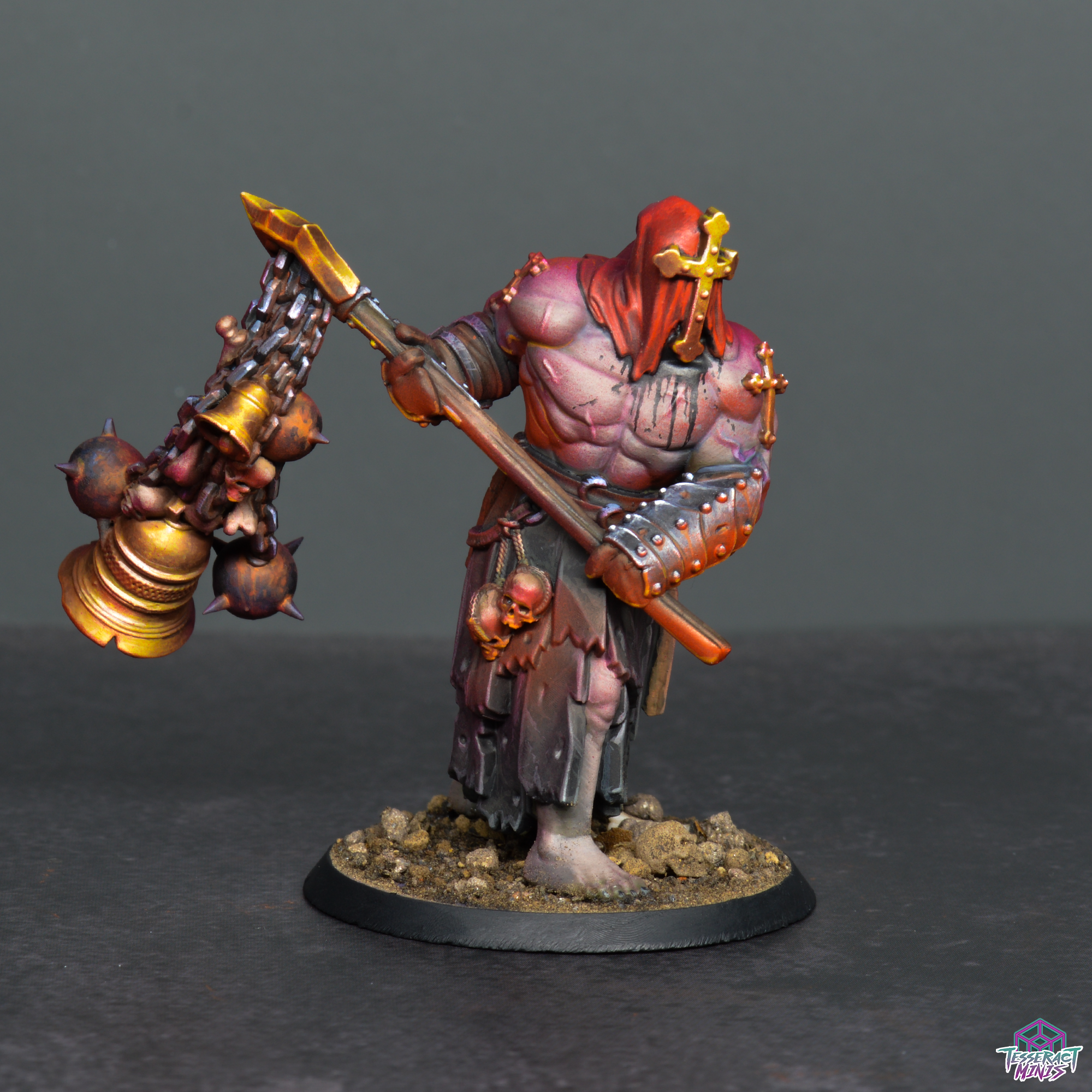
A Trench Crusade Communicant - One of my favourites from the original STL run
And that right there is the crux of this whole, long-ass post. You deserve to be the painter that YOU want to be.
If you want to master one style and one style only, and you want to consistently produce results in that style that excel then you can absolutely fine tune for that, have a great time, feel fulfilled and do amazing things.
If, on the other hand, you’re someone like me, who wants to develop their own style. Who wants to explore feel and mood and get in to the nitty gritty of how painting with playfulness in mind can create something that is entirely individual to you… then I hope this article helps. I hope it gives you the courage to be deliberately different, in a world where conformity is rewarded and straying from the path is punished.
My advice for those of you in camp B is simple. Get your fingers dirty, remove stakes and learn to play.
It’s your hobby, do it your way.