
Competitive Painting, and you.
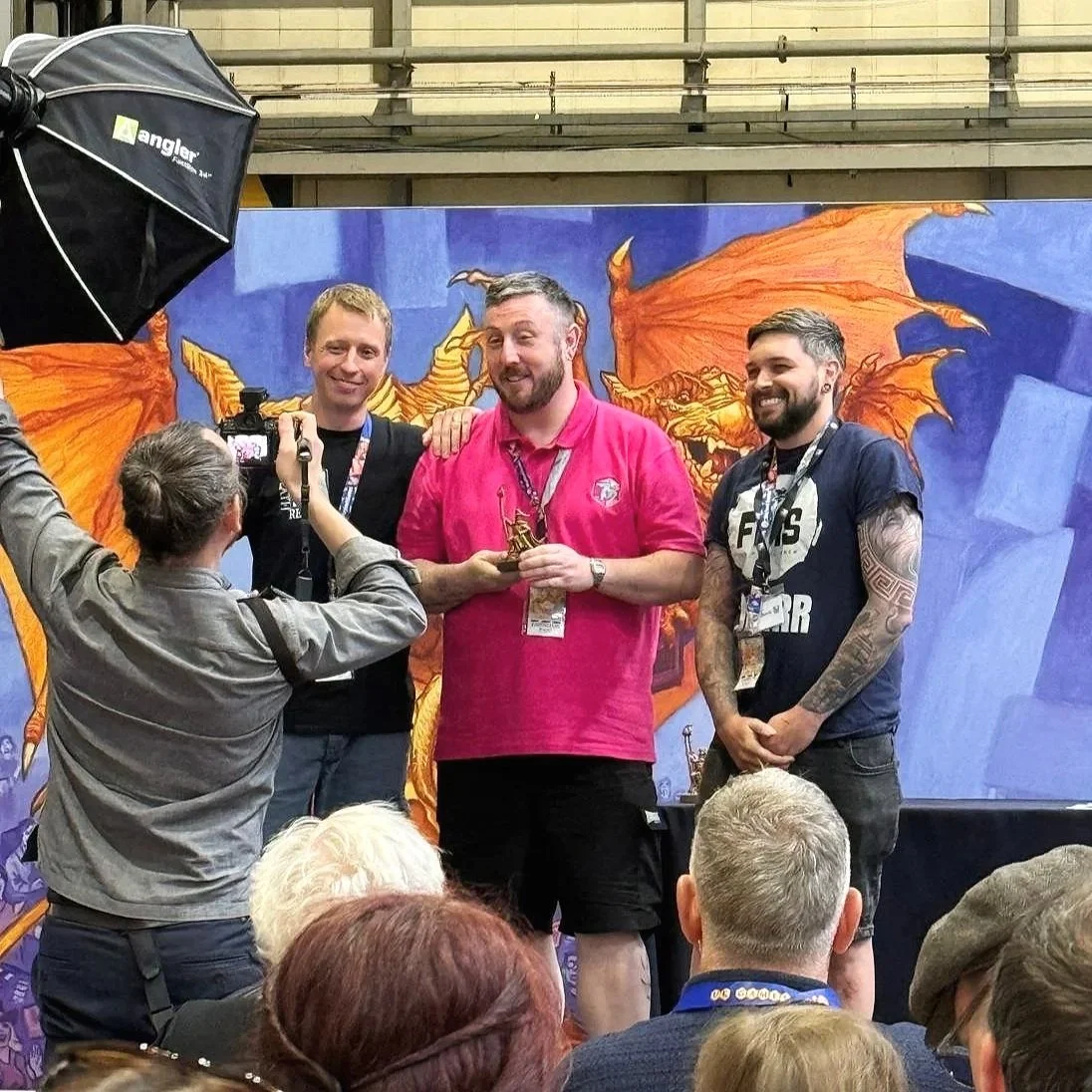
Accepting the Gold Trophy at Sir Coate’s Painting Masters UKGE 2026
Well… that was a surprise. I went in to SCPM this time around with honestly VERY low expectations. You see my history with this competition is a little mixed. I have only entered once before and my experience wasn’t super positive. I was incredibly proud of my piece, put in a LOT of work to get it right, felt it realistically stood a good chance after I’d seen the other entries…aaaaand it didn’t even get a sniff. Nery a mention nor nod. Not a sausage.
This in and of itself was difficult… last year when I first entered, I was (unbeknownst to me) at the start of a VERY strong year in competition; picking up standard silver at FEN, then grabbing standard gold and silver in both MPO online AND Squidmar Open. However, it wasn’t actually the result at SCPM that really got my year off to a troubled start… it was the feedback.
This is why I want to talk to you all about competitive painting today gang. I polled you this morning on Instagram and you wanted to hear my thoughts, so rather than hit you up with a million stories or a post that Instagram will undoubtedly bury, I’ve dragged you all here for a little story circle.
Competitive painting is something that is not only broadly misunderstood by those who don’t take part, but its largely just as misunderstood from within (IMO). I want to take some time in this article to talk about competition painting as a whole, but to start out with I’m going to focus on SCPM, where I struggled HARD last year and triumphed out of nowhere this year.
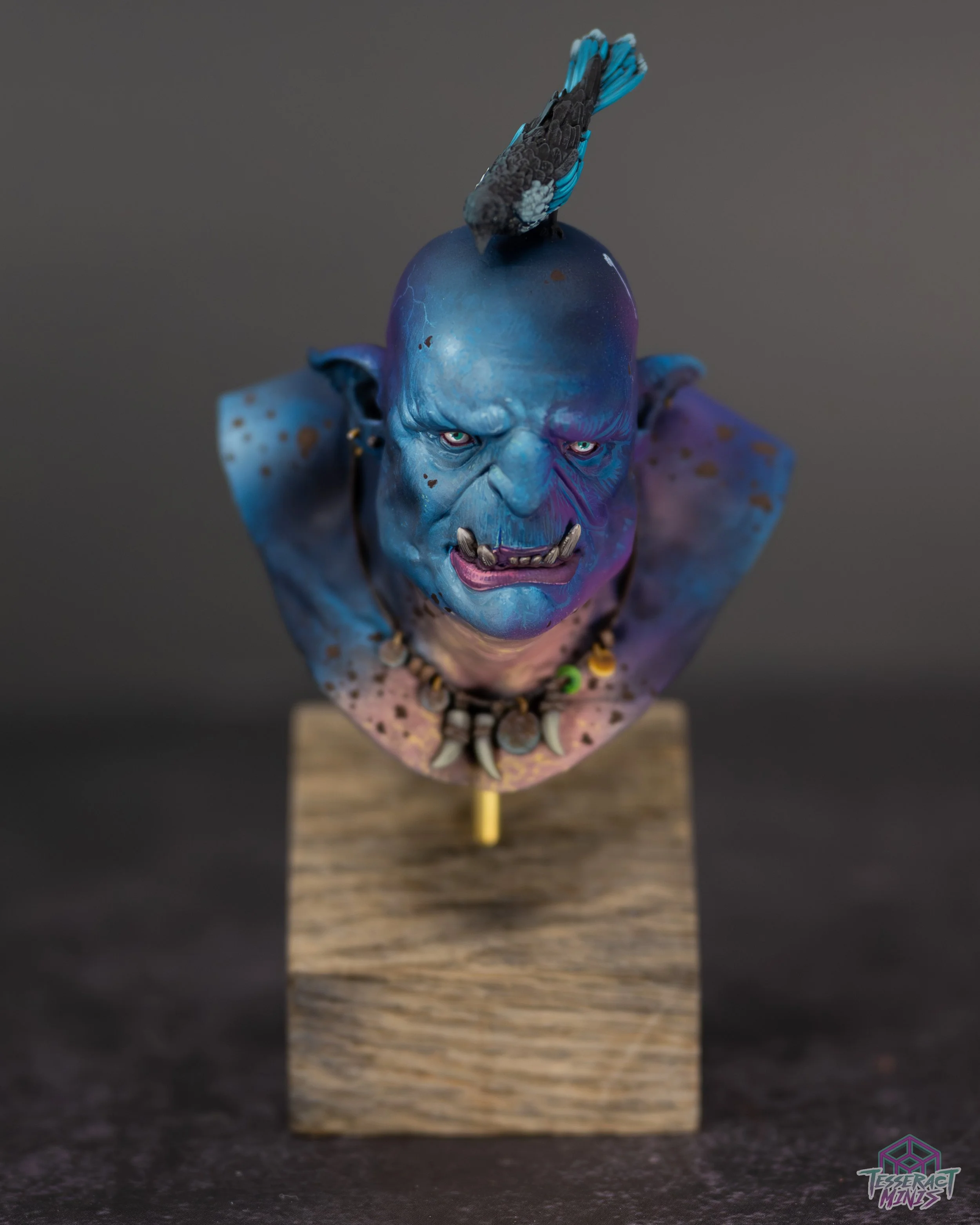
My gold winning piece from SCPM 2026
So… Sir Coate’s Painting Masters, or as I lovingly call it, Golden Duncan.
SCPM is an interesting competition… the ENTRANTS largely put in the kind of painting I’ve grown used to seeing at larger, more reputable competitions. A lot of the work is lit volumetrically, is clearly painted FOR display/competition and displays a broad range of skills at a high level of refinement. This is backed up by the usual offerings of really nice wargaming pieces that are obviously painted by VERY good painters and show a ton of skill and effort, just in more of a context of pieces for use, rather than dedicated shelf candy.
However where SCPM is different is in who is behind the judging desk. You see when you look at Fen Model Show, Monte San Savino, MPO, and many other of the world renowned painting competitions, you’ll usually find a cadre of judges from that more fine art/display influenced painting world. With SCPM the judging panel is usually skewed more toward ‘Eavy Metal style painters (including Duncan himself) and so for someone like myself who doesn’t even really attempt that EM level of refinement as a feature of their painting, I always find it a tricky one to get my head around.
This isn’t to say that my painting doesn’t contain edge highlights or recess shadows - the kinds of elements that when well executed will earn you points from any Eavy Metal admirer regardless of the overall style of your piece. But as someone who places reference, mood, colour composition, texture and lighting levels as the core structures of his painting, I often worry that my hard work will be overlooked in a comp like SCPM.
This brings me neatly back to my comment previously about why I was so gutted by my results from last year, or rather the feedback I got on my piece.
First of all, let me show you said piece.
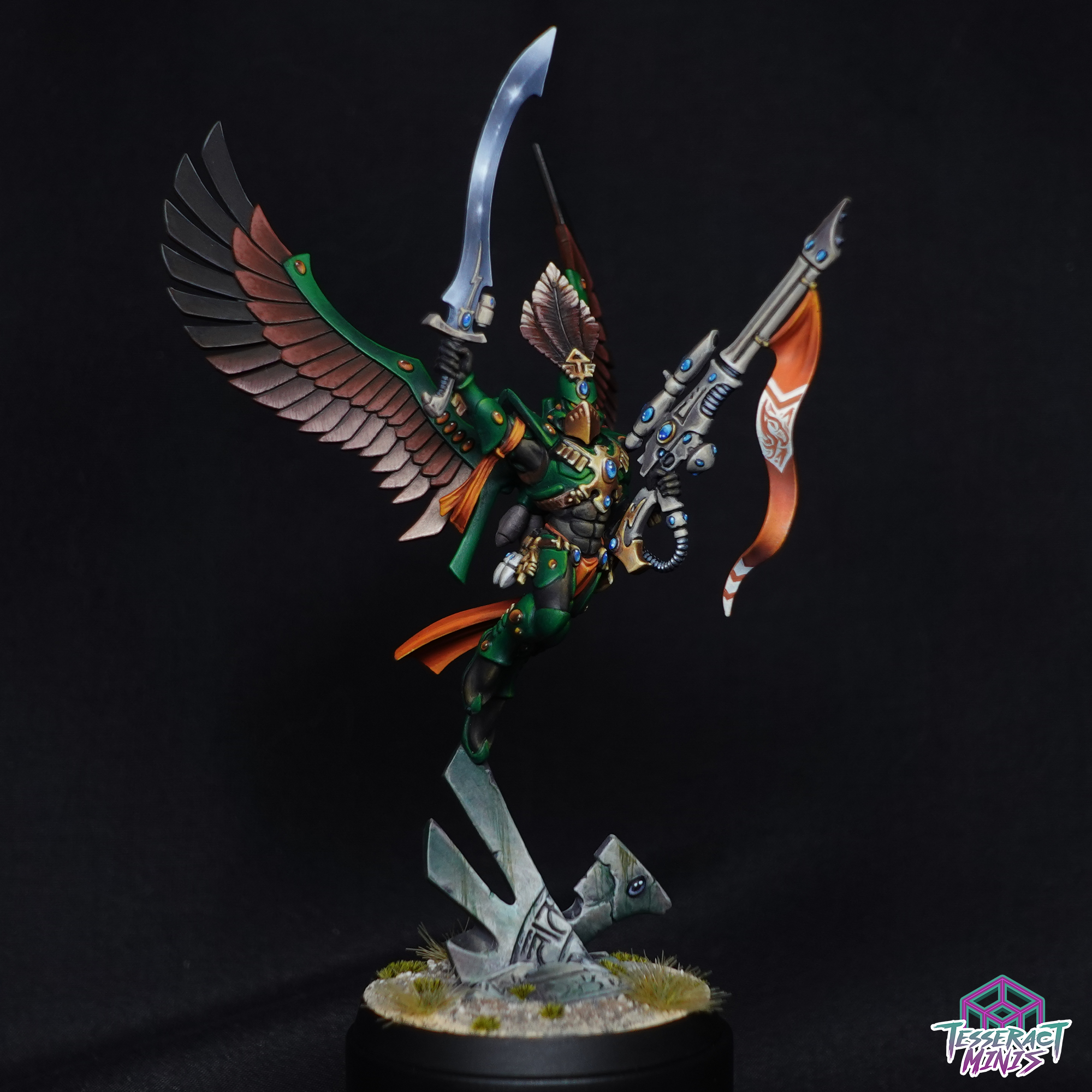
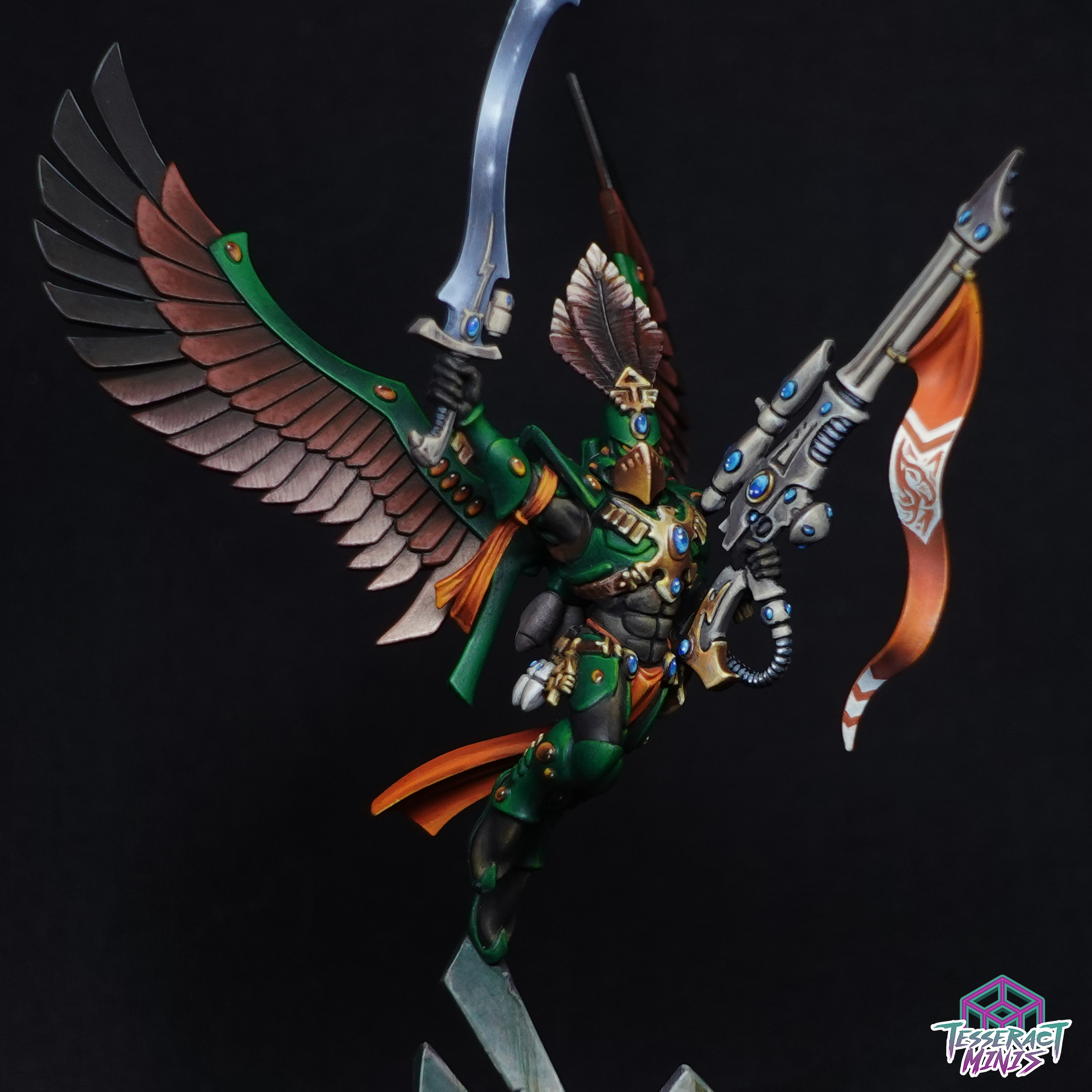
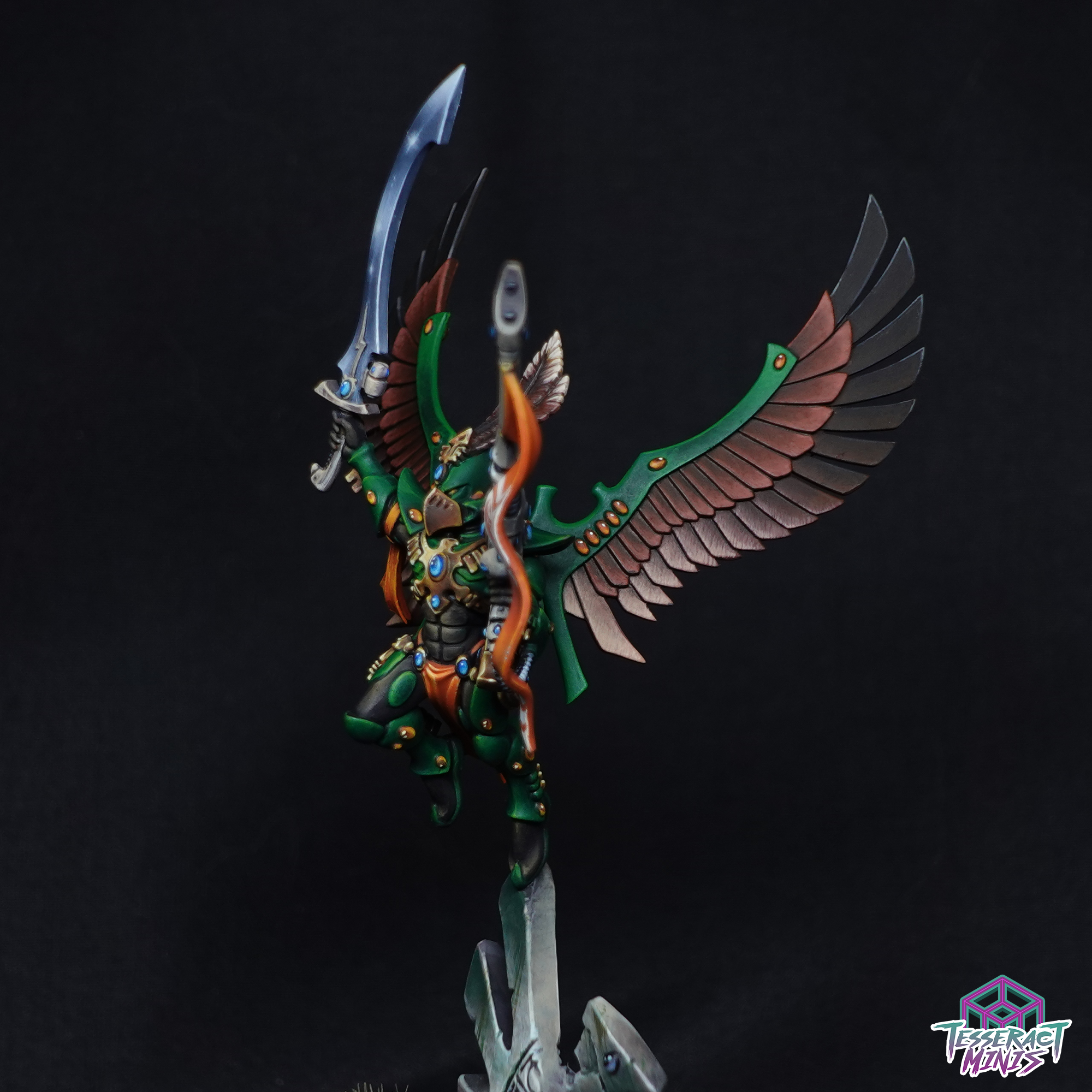
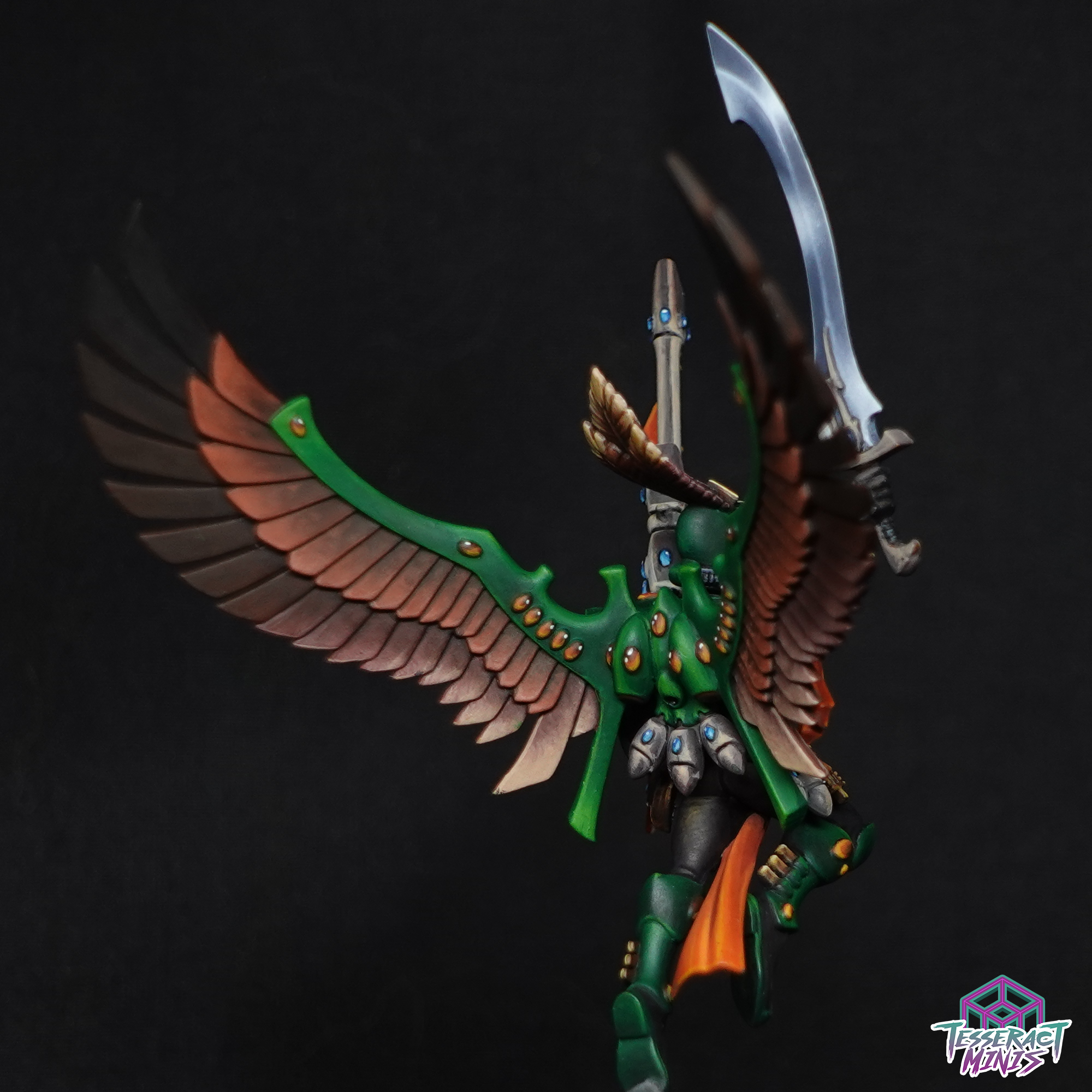
This is the only piece I put in last year and after a tour of the cabinets I honestly felt like it was in with a solid chance. I’d hoped for at least a finalist pin (which was my mistake and more on that later). To explain why my feedback was a problem for me, I first need to break down my thoughts behind the piece when I made it, and then what I would present as the strengths and weaknesses of the paintjob, a little self-evaluation if you will.
My main gameplan, since I was only putting in one piece, was to show some range to my skillset. This meant I needed to showcase a good bunch of the things I’m good at, within a single piece, but still keep it cohesive.
I decided to push a very high contrast colour composition - with bright orange and emerald green being clashy, dissonant colours that sit close to complementary on the colour wheel, but just a little off, so as to jar the viewer in to paying attention.
I wanted to show off a few styles of metallic rendering, with a softer, shinier sword and smooth but more midtone intensive gold.
A little splash of just basic and simple freehand, to show the judges I do have those skills, but didn’t feel they should dominate the piece.
Some texturing, inspired by realism but not quite obeying it, with the feathers coloured like those of an actual hawk, rather than some bright gradient based on the other tones in the piece, like we often see in a Swooping Hawk.
Finally and critically, I wanted to demonstrate that I could render different levels of lustre. Shiny metals, satin fabrics, matte armour. With each showing the appropriate contrast gradient, respective to its lustre.
Now that gets you nicely in to my head, for how I was putting this piece together at a conceptual level, and I think it’s fairly safe to say that I executed all of these intentions pretty well… definitely not world class levels, but I think all of the intent is properly demonstrated at least.
So… that feedback that caused all the problems for me.
The very first thing I was told is that I was “In contention to win because the piece was so good”. I honestly think it was just straight up a mistake for the judges to say this, because there CANNOT be any world where a piece goes from “contention to win” to not even making the finalist cut. That just isn’t mechanically possible in a top-cut system. I was either never in contention, or I was in the top cut but didn’t make the big three. It’s that black and white.
This was the only part of my feedback that actually upset me on a purely results-driven basis… because I knew the piece was good enough. I knew in my bones how hard I’d worked and the quality I’d delivered so what essentially amounts to an admission of mistakes in judging being the reason for no flowers is just something I couldn’t live with.
However the actual content based feedback upset me for totally different reasons, entirely on me.
I was told that the armour and fabrics were gorgeous but the armour needed to be pushed more in brightness. This was again difficult to hear, because I’d tried to render a matte surface. Matte surfaces tend toward midtone dominant light reflection and don’t peak in the highlights as much as satin or gloss surfaces. They have lower overall contrast. I had rendered the surface correctly to intent, but my intent had been read as incomplete work. I wracked my brain for MONTHS after this comp, trying to puzzle solve this problem.
I was also told that my wraithbone was so good, the piece could have won on that alone, but the armour had let it down. Again… tough feedback, because the neutral wraithbone sections were supposed to sit back in the composition and let the other stuff shine. A deliberate backup dancer feature, had been identified as a star of the show… another problem I didn’t know how to solve.
Finally the wings - I was questioned as to why I’d chosen those colours, from completely outside the rest of the scheme. They couldn’t understand what I was thinking with that… as explained earlier, it was a very deliberate choice, a nod to an actual, real life hawk, to tie some whimsy into what could have ended up a rather clinical paintjob.
Now when you compare my intentions and my feedback you can see the problem here… I’d completely and utterly failed to actually show the judges what I was trying to show. I didn’t see anything that wrong in how I’d actually painted the things I wanted to paint, so all I had left from this feedback was that my mindset, planning and storytelling were entirely off base.
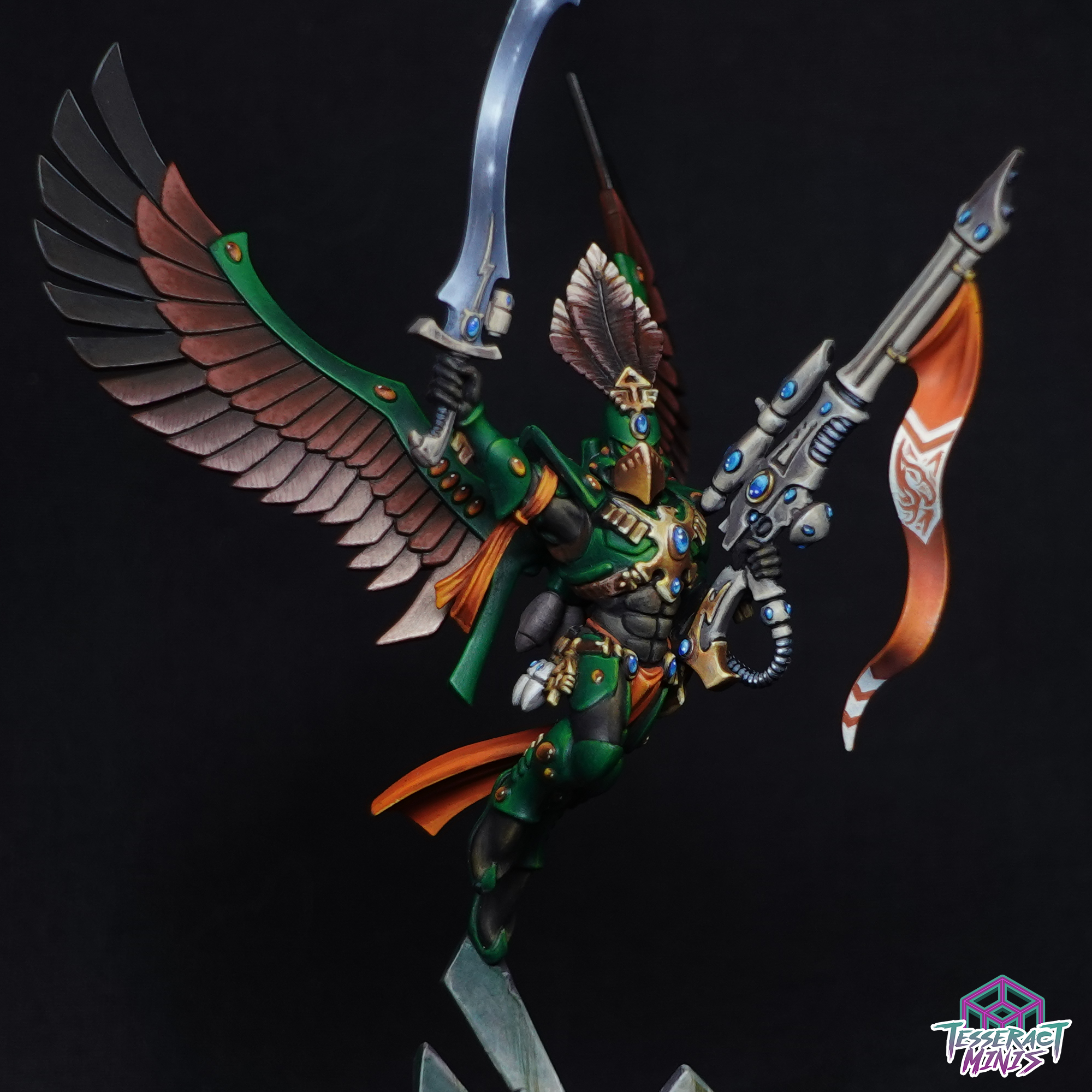
A closeup of my 2025 entry.
Here’s why all this ramble was important and where I really need your attention.
The piece was GOOD. It had a plan that was interesting and not routine. It delivered on that plan to a pretty high standard. I didn’t do anything MAJOR wrong with the actual painting. I still got nothing.
This is the BIG lesson about painting competitions, that everyone learns eventually. Awards are (in some ways) virtually meaningless. The most valuable takeaway from ANY competition is the feedback and how you implement it. If you don’t ask for feedback after the comp, you’ve already lost, regardless of what colour the trophy is in your hand.
After a year of stewing over Baharroth, I see tons I could do better now. Technically, conceptually, there’s issues and thanks to my feedback I’ve scrutinised the model, decoded the problems and worked on those areas in my painting. Equally, based on that feedback, its clear to me that even if I’d painted what I INTENDED perfectly, I still wouldn’t have won. Being down over not getting the medal does nothing for me, because that medal was never mine to get.
The meaning we assign to trophies and results should be as a milestone, as an acknowledgment that you grew enough for people to see what you were trying to do. If you boil them down to the individual results on the day, you’re fighting a losing battle and its a really unhealthy way to approach competitive painting. Your drive to improve has to come from your desire to be the best YOU you can be. Not from filling a shelf with statues and plaques and certainly not from imitating your heroes.
If I could best describe my competitive mindset, it would be with this… a friend of mine picked up a finalist pin this weekend for the first piece she’s ever put in a comp cab. She hasn’t even been painting super long. THAT is a FAR bigger achievement than a competition regular, who has over 30 years experience and teaches painting for a living snagging a gold.
The sheer stones to put your first ever competition piece up in such a big competition ALONE is more bravery than I’ve ever shown in any comp and these are the precious things we need to remember to cheer people for.
I was absolutely sure I wasn’t walking away from this competition with anything (no seriously, in the category I won, during the pause before announcing the award and reading the name, I was saying one of my friends names over and over in my head because I was SURE Duncan was about to announce them as the winner). The win is wonderful. The pins are wonderful. The whole thing feels amazing… but not for the trophy. Rather I’m elated at the achievement of finally getting my ideas and thoughts over in my painting to a level where they’re seen in a competition that I expect to overlook me. That level up is the trophy I am most grateful for and those judges have all my love for giving it to me.
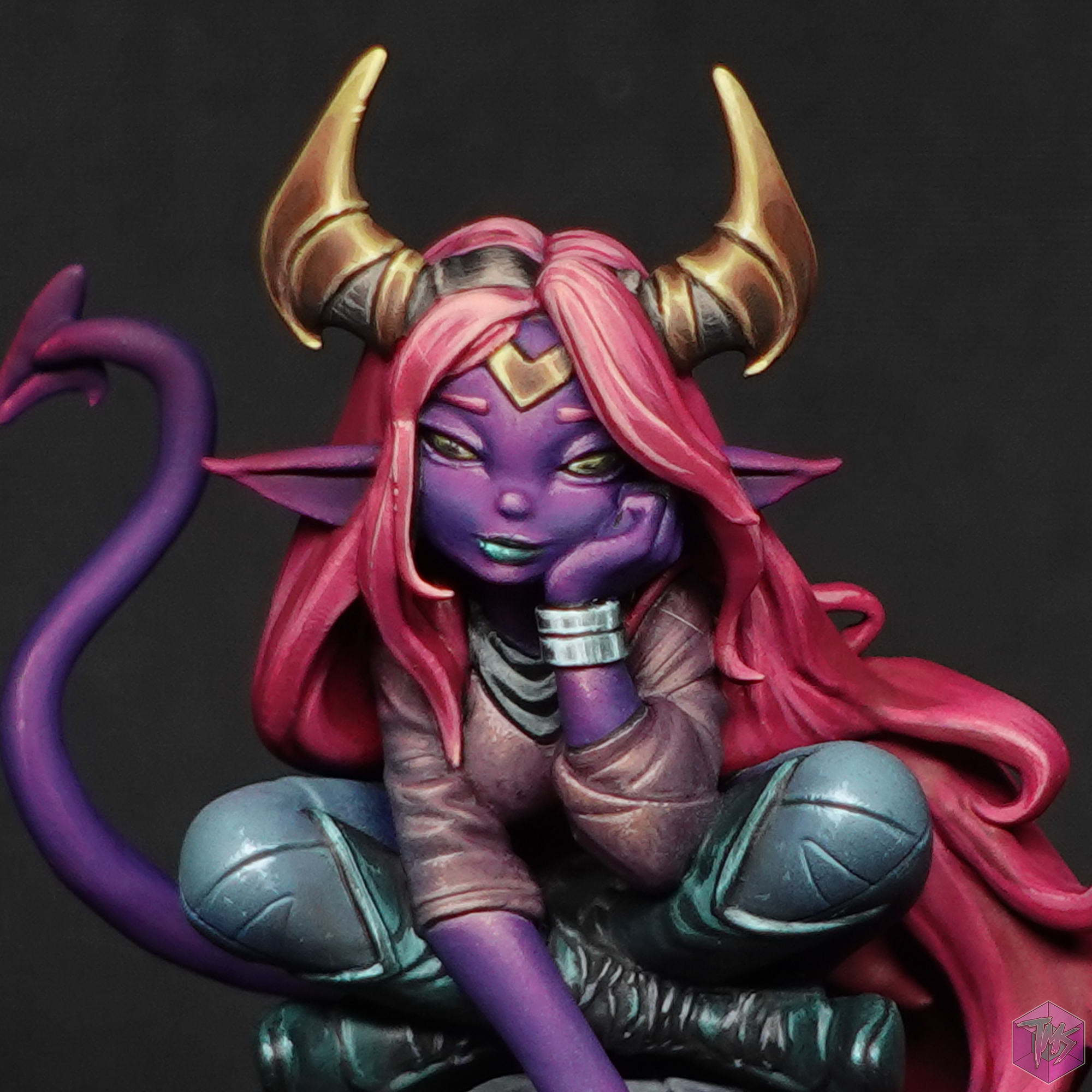
A piece I painted for a competition but never entered.
Lessons like these are VITAL if you want to survive long-term in competition and pursue excellence as a painter (or any other creative, to be honest). That tiefling above is a piece I absolutely love and am proud of, but it never made my cut for competition, because I just felt it didn’t show anything of me. It was all expected colours, obvious rendering styles. Cute? Sure! Well painted? Pretty much… but as an artistic expression it was a bit empty. A bit all sizzle, no steak.
What I’m trying to say is that the motivations to place your heart and soul in those cabinets have to come from inside you, not from the desire to win hardware.
This year at SCPM, I just entered models I’ve really connected with and enjoyed in some way. I took the first Malifaux Crew I ever painted for myself. I took a high tabletop commission piece for a dear friend that I just had a ton of fun painting. I took a comp piece that wasn’t fully finished, but I’d been getting so lost in the sauce on that I just wanted to stick it in a cabinet and see if people dug it…and finally I took a piece that I just painted for the pure love of the sculpt and entirely out of raw inspiration. It’s that final piece that got a trophy this time.
The ogre and magpie piece isn’t my best technical painting. It isn’t my best composition. It wasn’t the best painted piece in its category, or at the show, from a purely mechanical, execution based view. It won a gold trophy and I was personally told by a judge that it was the other half of the final two conversation for best in show. Hilariously and as a brief sidebar… I also broke it Friday morning getting it out of my case and had to both repair it AND patch the paintwork. It felt entirely cursed from the off!
With all that said and the dust settled, I am eagerly awaiting feedback on the one that isn’t finished because that’s the one I’m using to actually push my skills… it’s this guy, by the way:
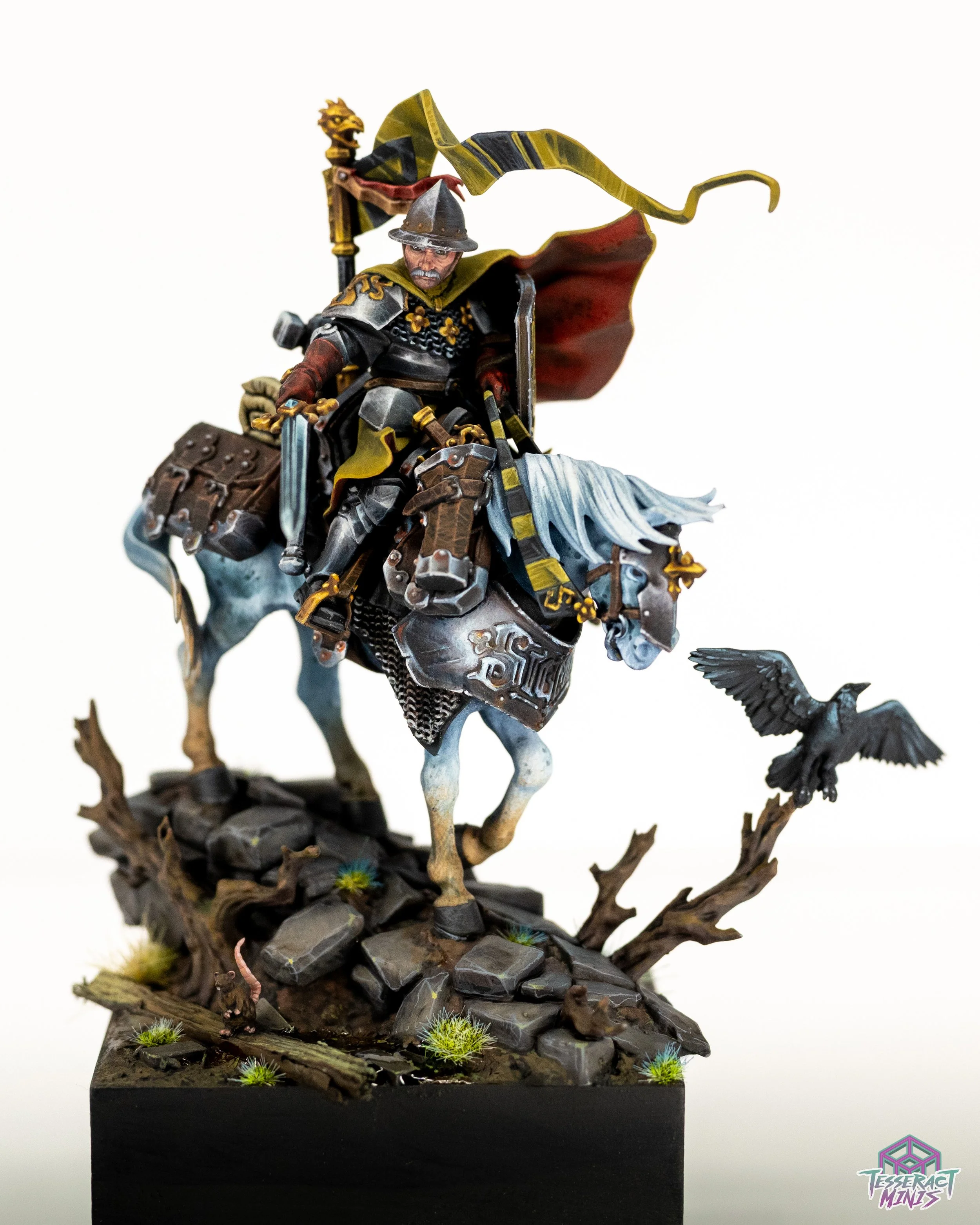
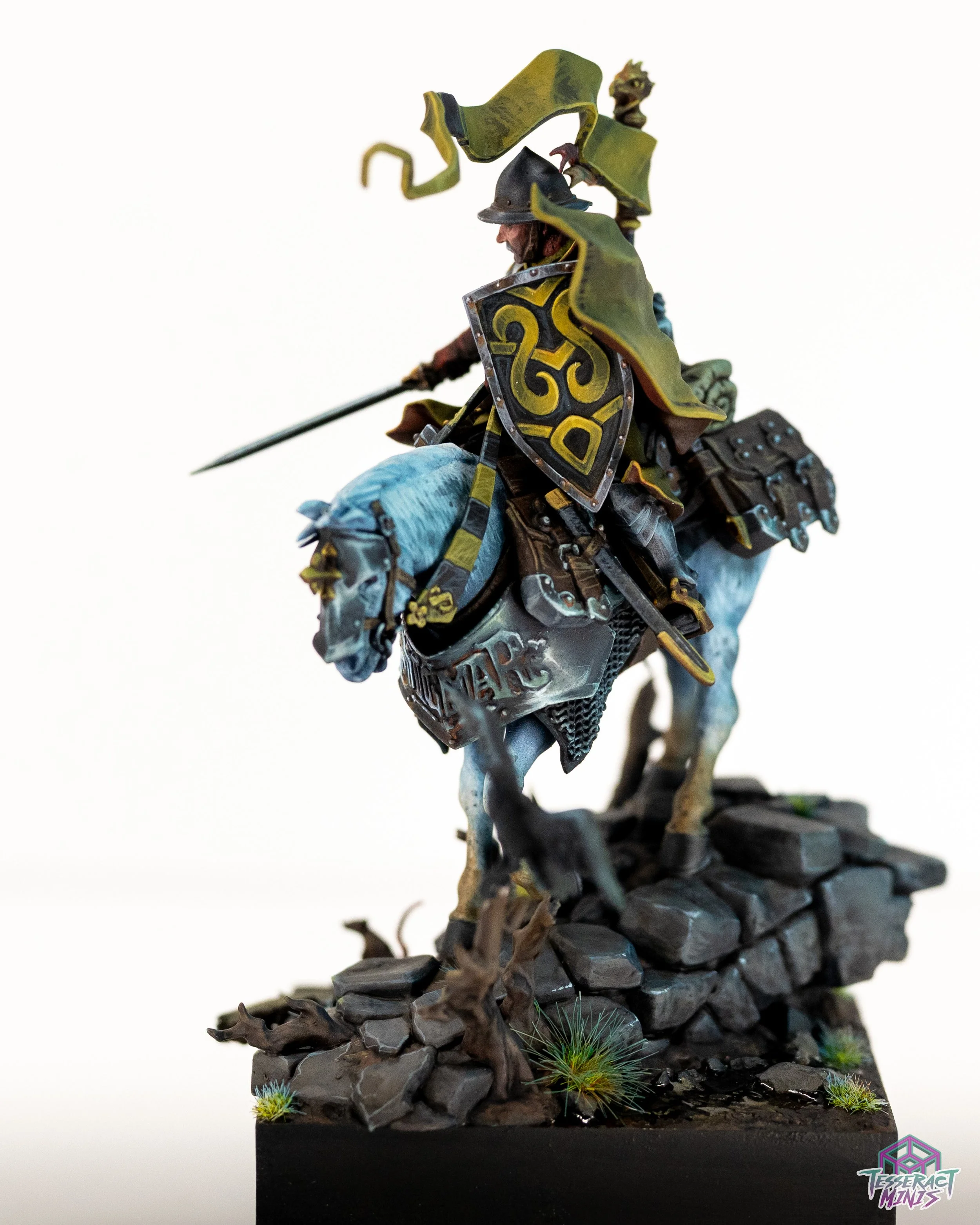
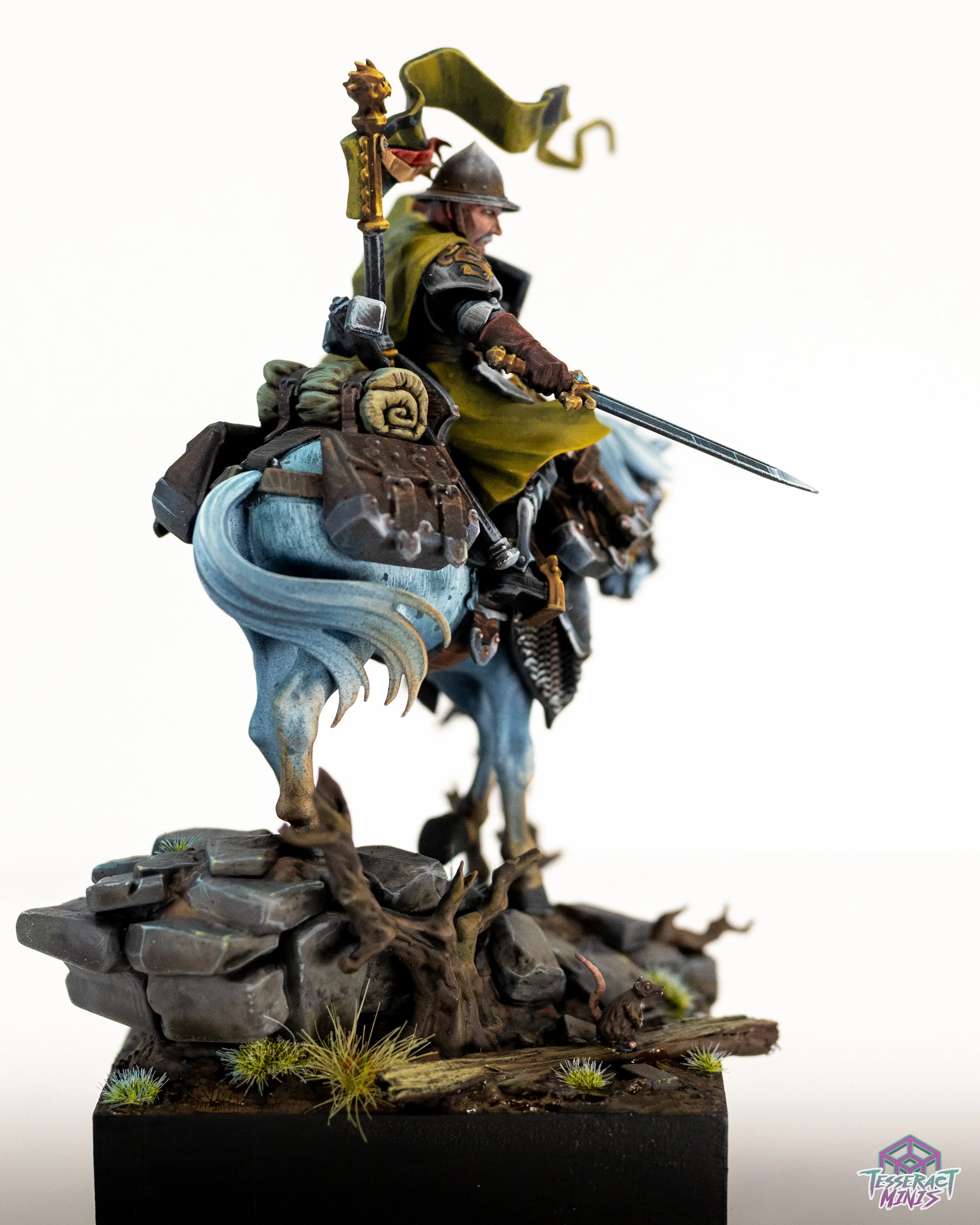
The other three though, including the winner? I’m not even interested in feedback on. They were simply painted with love, for fun and the pure pleasure of painting, and they’ve had more than enough time in the sun now. The lessons I would learn from them aren’t a part of the reason they exist, and they’re best left to rest.
Horseboy here though… he bloody well better get some useful feedback because I really want to get him to a level where he’s knocking socks clean off of feet!
All of this should go to show just how broad the gamut is, of pieces that can and DO perform well in competition. It’s so easy to get Golden Demon pilled in to thinking that ONLY technical excellence is what makes a good piece. In to thinking that unless every stroke you lay is perfect, your work isn’t worthy of the big glass boxes. Its bollocks. Competition painting and indeed ANY artistic competition is about how you speak to the observer through your work. Have some cajones, say something, put up work that challenges convention and most importantly, work that represents who you are as a person.
When you get that feedback (and please make sure you do) don’t just take it at face value - analyse its compatibility with your painting. With your intentions. With your desires. Implement the areas that pull you closer to achieving YOUR vision of your work. You don’t want someone else’s trophy, you want YOURS. Learn who you are as an artist, what you want to create and pursue it with rabid ferocity till the wheels come off.
That’s how you avoid competitive burnout, that’s how you survive and that’s how you earn lasting respect from your peers. The number of golds in your cabinet is a beautiful demonstration of your dedication and determination… but its an incomplete story.
At least that’s how I see it. I’ve never been someone who needs to be right, but I’ve always been someone who isn’t afraid to feel differently to the crowd and talk on it when asked to.
Now look, I’m going to end this article with a bit of a sales pitch, but before I do, I want you to understand where its coming from.
My brand, Tesseract Miniature Studios, is built from the ground up to be a platform from which I can try my very best to help people overcome the problems I faced throughout my journey. The very fabric of everything we do, make and say is interwoven with that desire to not see people who love this artform, spiral into a cycle of burnout, recovery, and repeated burnout.
So, after I click publish on this article, I’m going to nip off to the back end of my website and add a 10% discount code on brushes. That code will be ASHKETCHUM (because he wanted to be the very best, geddit?). It’ll be up for a limited time, so please use it if its useful to you. I’m doing this because if you read this article and it gave you even a smidge of determination to knuckle down and get to work, you might also want some new, high quality tools to get you off the line. My little thank you for hearing me out.
The second thing I’m gonna do is add a new purchaseable item to the shop. A ticket for an hour long session of feedback and discussion on one of your painted pieces. Audio call, video call, purely text based, whatever’s most comfortable for you. This will be priced at £20, which is a third off what I usually charge for this service. I will use my experience and skills to try my best to help steer your work in the direction YOU want it to go. I won’t tell you what I want to see from your work, I’ll figure out what you want and help you target that in your practice.
These are small gestures that I can make, to both stand on what I’m saying in this article, and soften the entry in to questing for improvement. I can’t give these things away for free, but I can damn sure do my best to help you, if you’re willing to put a little trust in me. Head over to the STORE after reading this, if you fancy it.
I adore miniature painting with the very core of my being. This artform has given me life, happiness, hope, a career, aspirations, a path… I owe it everything, and I will always try to give back however I can.
If you want to come on a longer journey, I’ll also take a quick opportunity to remind you we have our monthly tuition club over on my PATREON where we spend 4 hours every month learning various aspects of miniature painting together.
Now sales hat off (a girl gotta eat) I just want to close out by quoting one of my core mantras, as a painting tutor.
“Everyone, regardless of experience, has a painter inside them who is better than their wildest hopes.”
Competition is how I learned this about myself. I love competition… the value it offers to our progress is immeasurable. Huge thanks to Duncan Rhodes, Nat Heywood, Martin Collier and all the team behind SCPM 2026. Y’all are amazing and I appreciate your hard work. I’ll be in your DMs for my feedback soon.
With love,
Stu